MAIN EXHIBITION
Curator Koyo Kouoh described the main exhibition, In Minor Keys, as an invitation to listen for the “persistent signals of earth and life,” connecting to “soul frequencies.” The exhibition proposes the minor key not simply as a register of melancholy, but as a space where joy, solace, hope, and transcendence might also emerge.
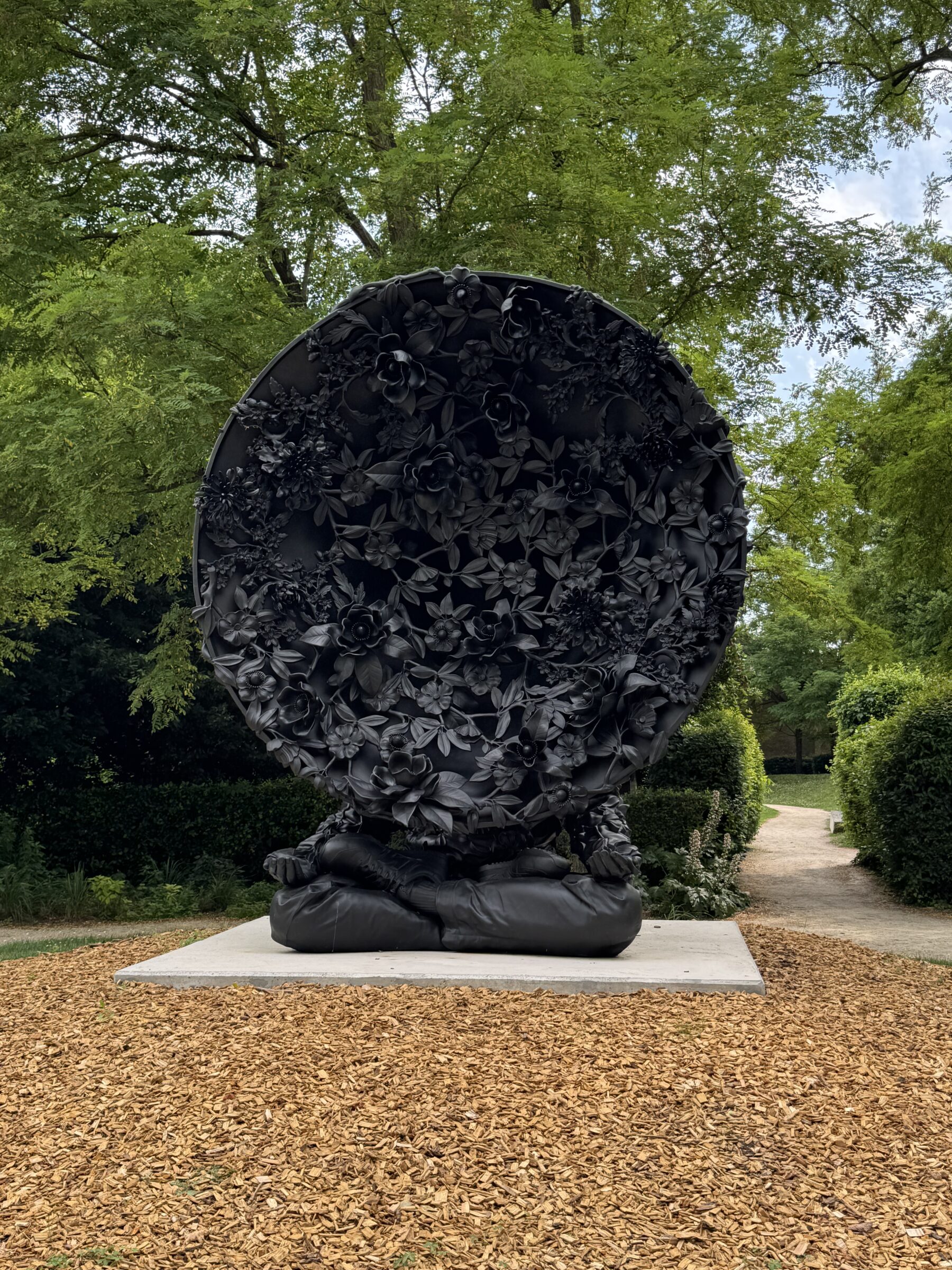
Nick Cave’s Two Points in Time – At Once is a suite of seven works unfolding across the Arsenale as a quiet liturgy of grief, remembrance, and hope. Conceived with the late curator Koyo Kouoh, the installation traces an emotional pilgrimage through seven stages of loss, where monumental bronze sculptures and intimate domestic objects become vessels for memory, inviting viewers to inhabit the space where mourning and renewal coexist. At the heart of the presentation is the Amalgam series, whose reclining and seated bronze figures are crowned with exuberant floral forms. The title itself suggests a joining together—of suffering and beauty, body and spirit, death and resurrection. Rather than resolving these tensions, Cave holds them in delicate balance, offering sculpture as a site where lament can become transformation. For those attentive to the intersection of art and spirituality, Two Points in Time – At Once proposes that grief is not merely something to endure but a sacred threshold through which we encounter mystery. Cave reminds us that hope is not the opposite of sorrow but its companion, and that beauty can become a form of devotion—bearing witness to loss while insisting on the possibility of new life.
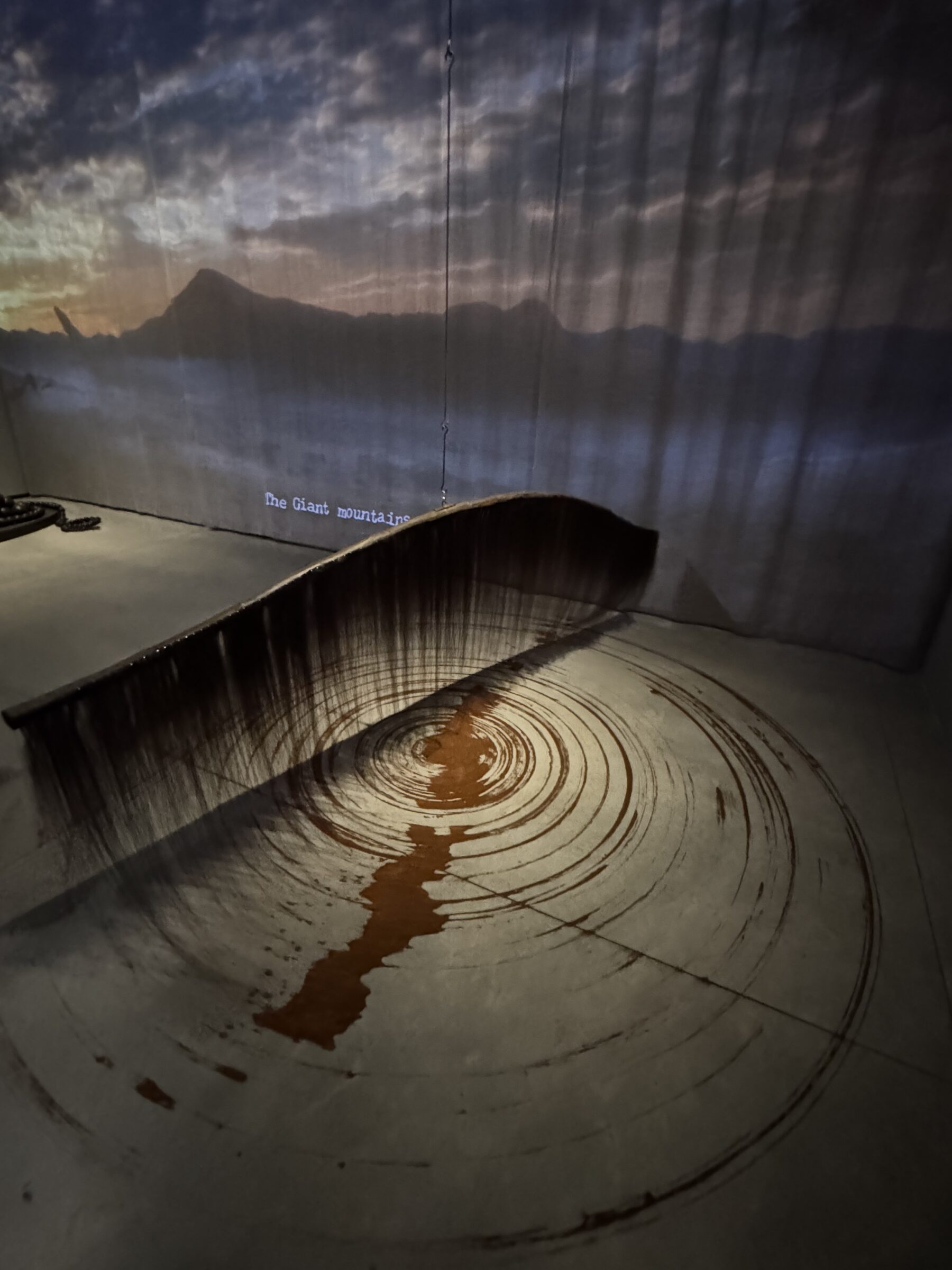
Wangechi Mutu’s contribution to In Minor Keys is a meditation on transformation, ancestry, and the sacred intelligence of the natural world. Across sculpture and installation, she creates hybrid beings that blur the boundaries between human, animal, and divine, drawing upon East African cosmologies, mythology, and ecological memory to imagine identities that are fluid, resilient, and continually becoming. Mutu locates spirituality within bodies, landscapes, and the unseen forces that bind them together. Her figures resist fixed categories, embodying a vision of creation as relational rather than hierarchical—a world in which healing emerges through interconnectedness rather than domination. In the context of Koyo Kouoh’s In Minor Keys, these works become quiet acts of communion, inviting viewers to attend to the frequencies of memory, ritual, and the more-than-human world. Mutu reminds us that contemporary art can function as a kind of cosmology: not merely representing the world as it is, but offering new ways of imagining our place within creation. Her work gestures toward a spirituality rooted in regeneration, where the fractured self and the wounded earth alike hold the possibility of renewal.
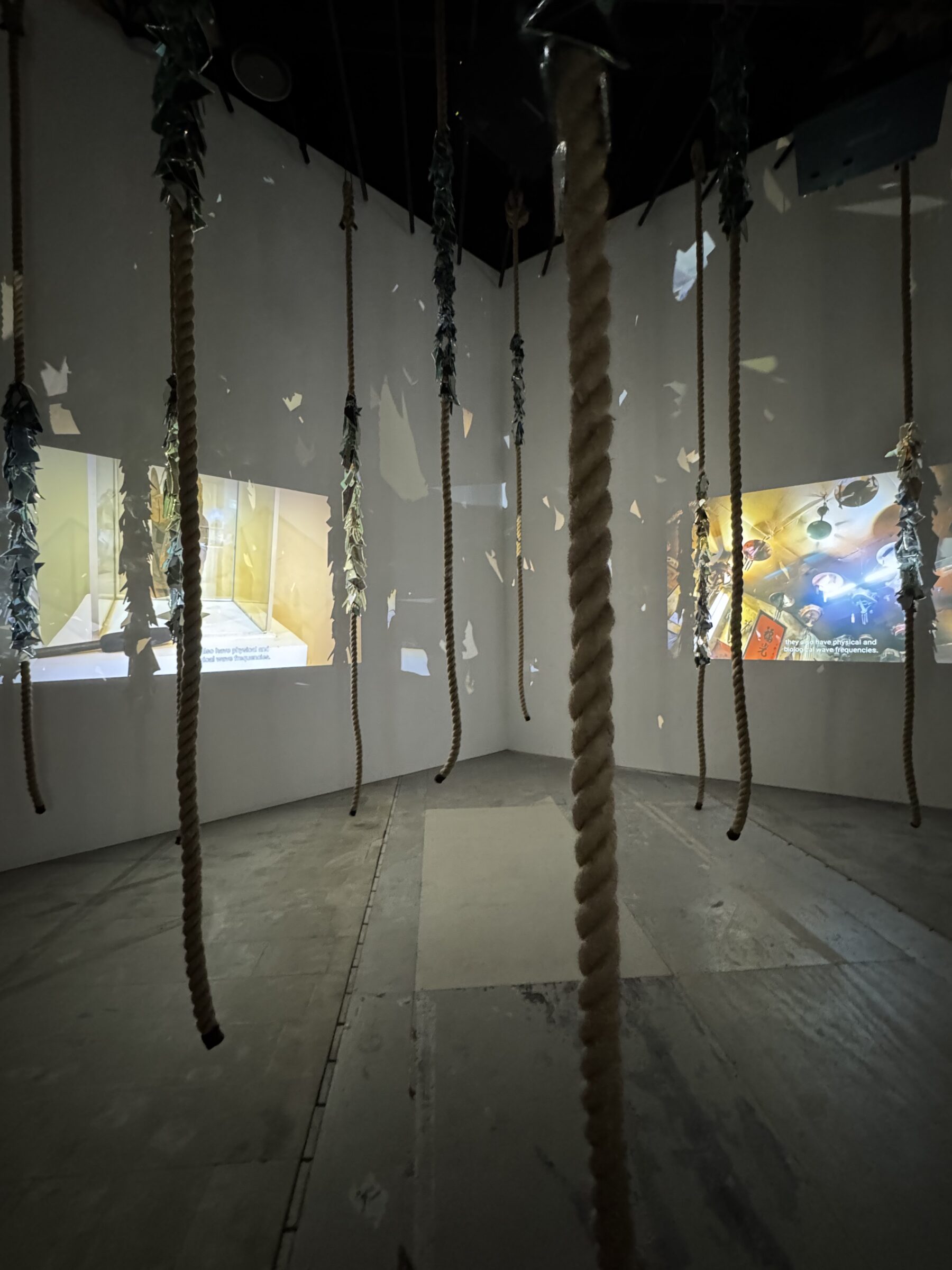
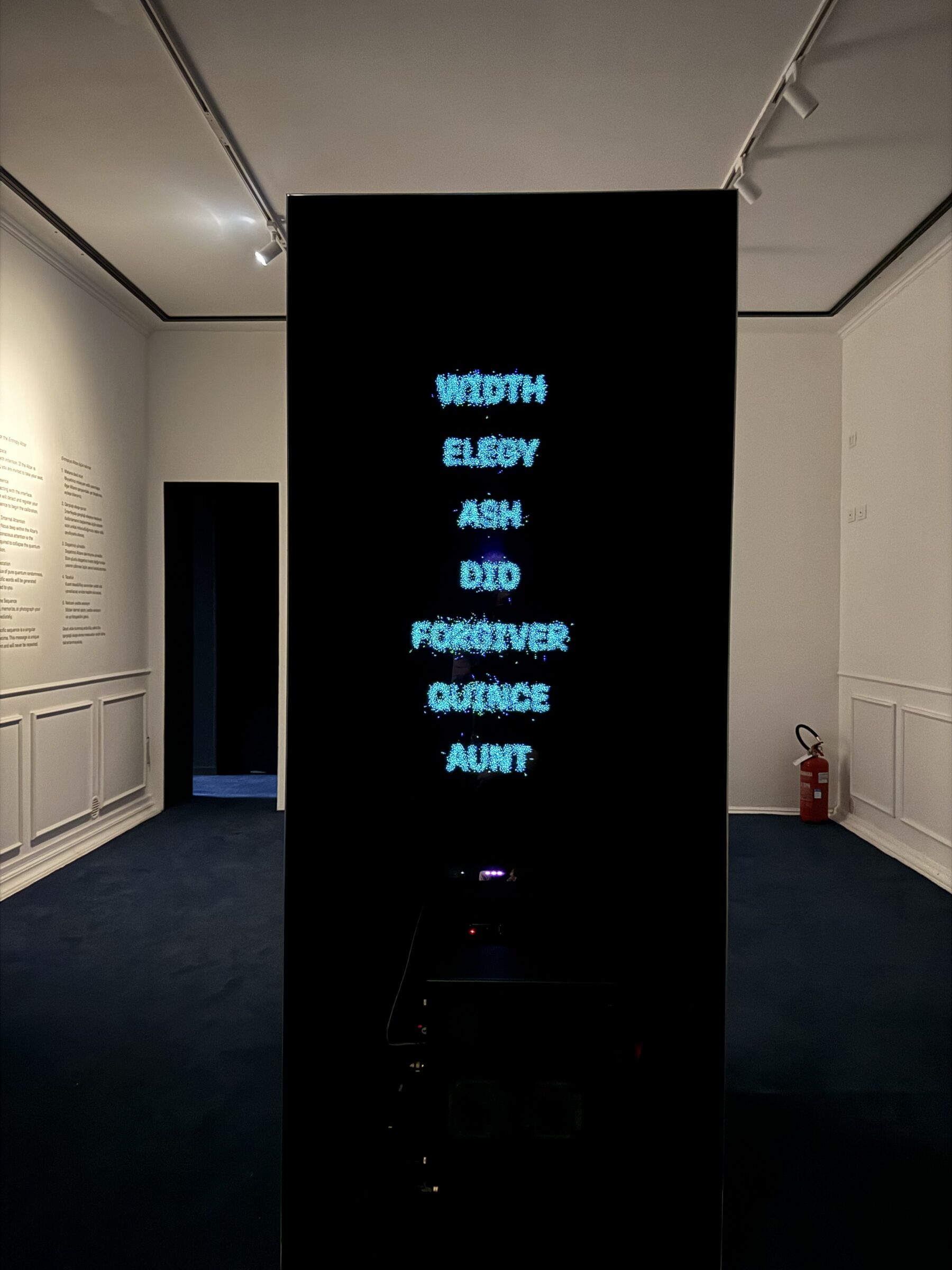
Kader Attia’s Whisper of Traces takes that openness to unseen worlds into the realm of technology. The installation begins with the statement of a Vietnamese shaman who described computer viruses as “spiritual entities” capable of thwarting human attempts to dominate the virtual world. Attia treats this proposition seriously, asking what happens when we entertain the possibility that technology might not be entirely within our control. The work brings African ritual objects into proximity with modern art, dried herbs, mirrors, ropes, sound, and audiovisual technology. Ancestors and spirits seem to inhabit the technological environment rather than existing outside it. Attia ultimately connects this possibility to the ancient Greek concept of the daímon: a spirit or intermediary force that need not be understood simply as good or evil.
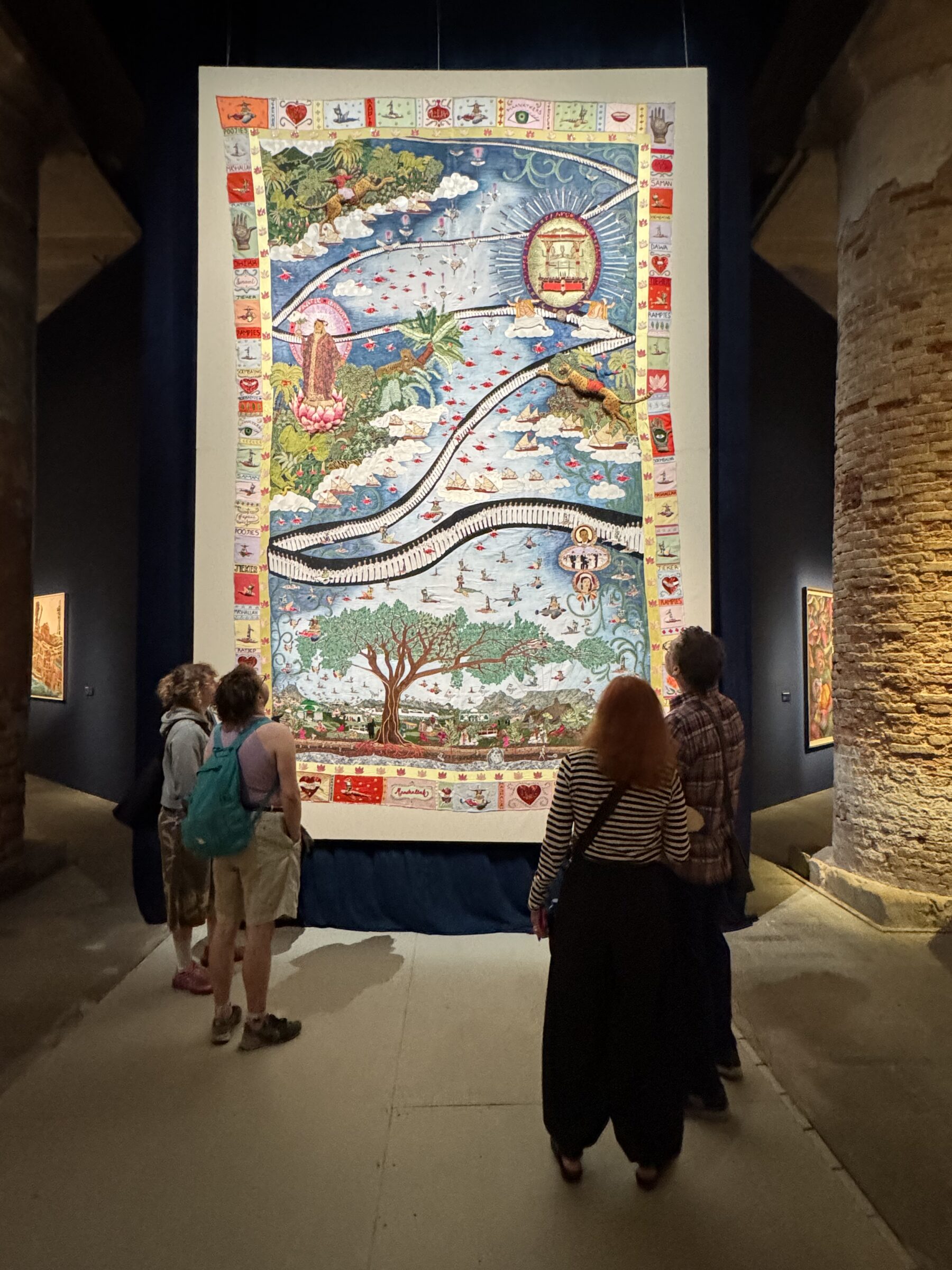
Thania Petersen’s Cosmological Offerings for a Drowning World unfolds like a sacred map. Drawing upon the visual traditions of Indian miniature painting, illuminated manuscripts, and Islamic cartography, the South African artist weaves an intricate tapestry in which islands, saints, gardens, trees, and celestial forms become points of orientation within a cosmology shaped by Sufi spirituality, migration, and Afro-Asian heritage. Petersen’s practice is deeply informed by Sufism, with its emphasis on divine love, remembrance, and the soul’s continual journey toward God. A procession of Muslim saints winds across the tapestry like an infinite path of pilgrimage, while earthly and heavenly realms seem to dissolve into one another, suggesting that spiritual geography cannot be separated from lived experience. Like the exquisite detail of a Mughal miniature or an illuminated manuscript, every thread rewards sustained attention, reminding us that contemplation often begins by looking more closely. Cosmological Offerings for a Drowning World proposes that maps do more than chart physical territory—they can also orient the soul.
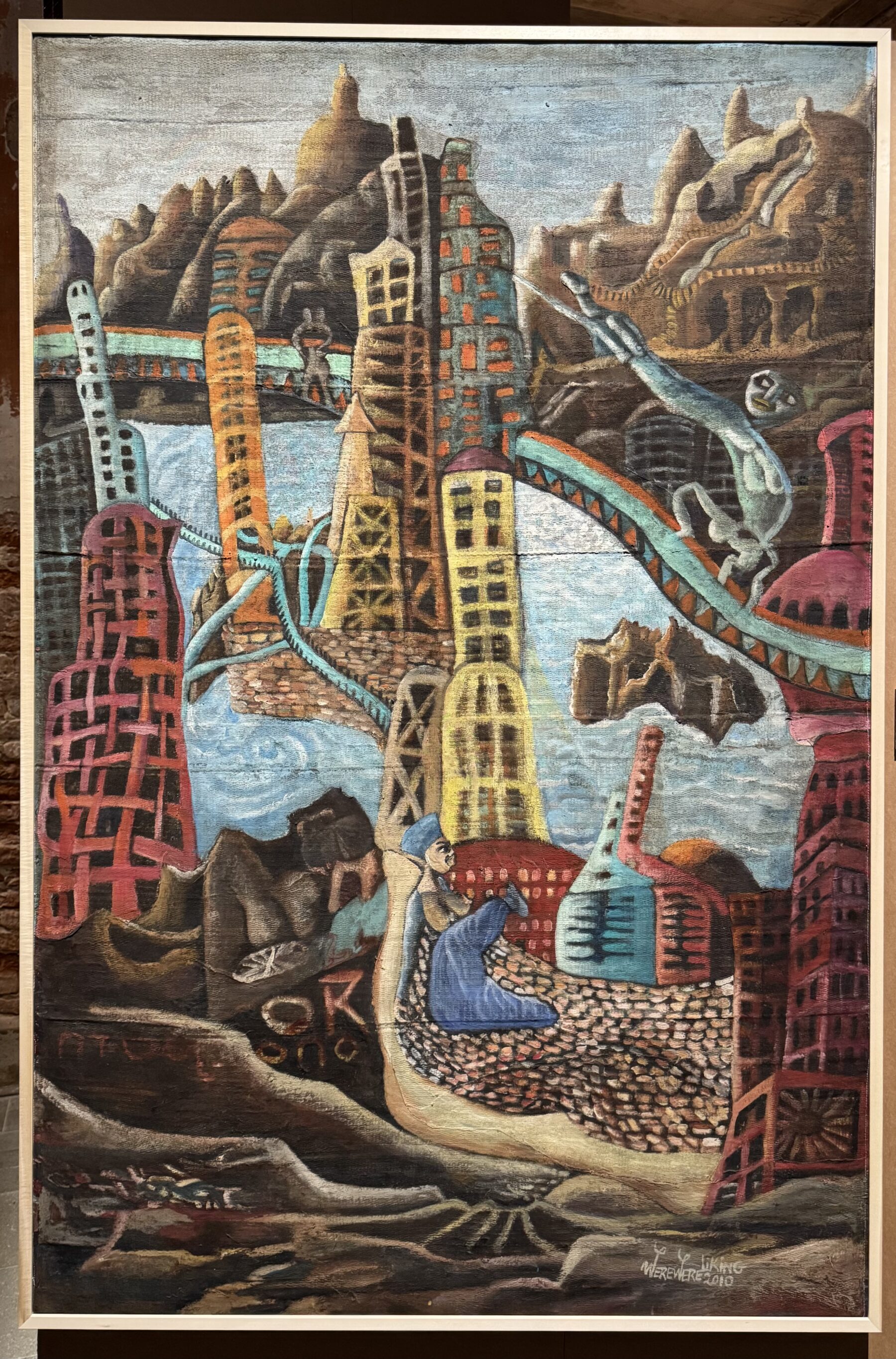
Werewere Liking’s contribution to In Minor Keys reminds us that art can function as both archive and altar. Bringing together nearly five decades of paintings and sculptures from her Genealogies of Lights series, the Cameroonian-Ivorian artist creates a visual cosmology where memory, ancestral knowledge, and spiritual imagination are inseparable. Her works—fashioned from carved wood, recycled materials, and even mended tree bark—suggest that creation itself is an act of repair, transforming what has been discarded into new possibilities for meaning and communion. Liking has described her artistic practice as emerging from experiences of “mediumship,” where recurring images and symbols arrive through deep contemplation rather than conscious invention. Suns, moons, trees, pregnant figures, and ritual vessels recur throughout her work, not as fixed symbols but as living presences that point toward healing, feminine power, and the invisible forces that shape human existence.
NATIONAL PAVILIONS
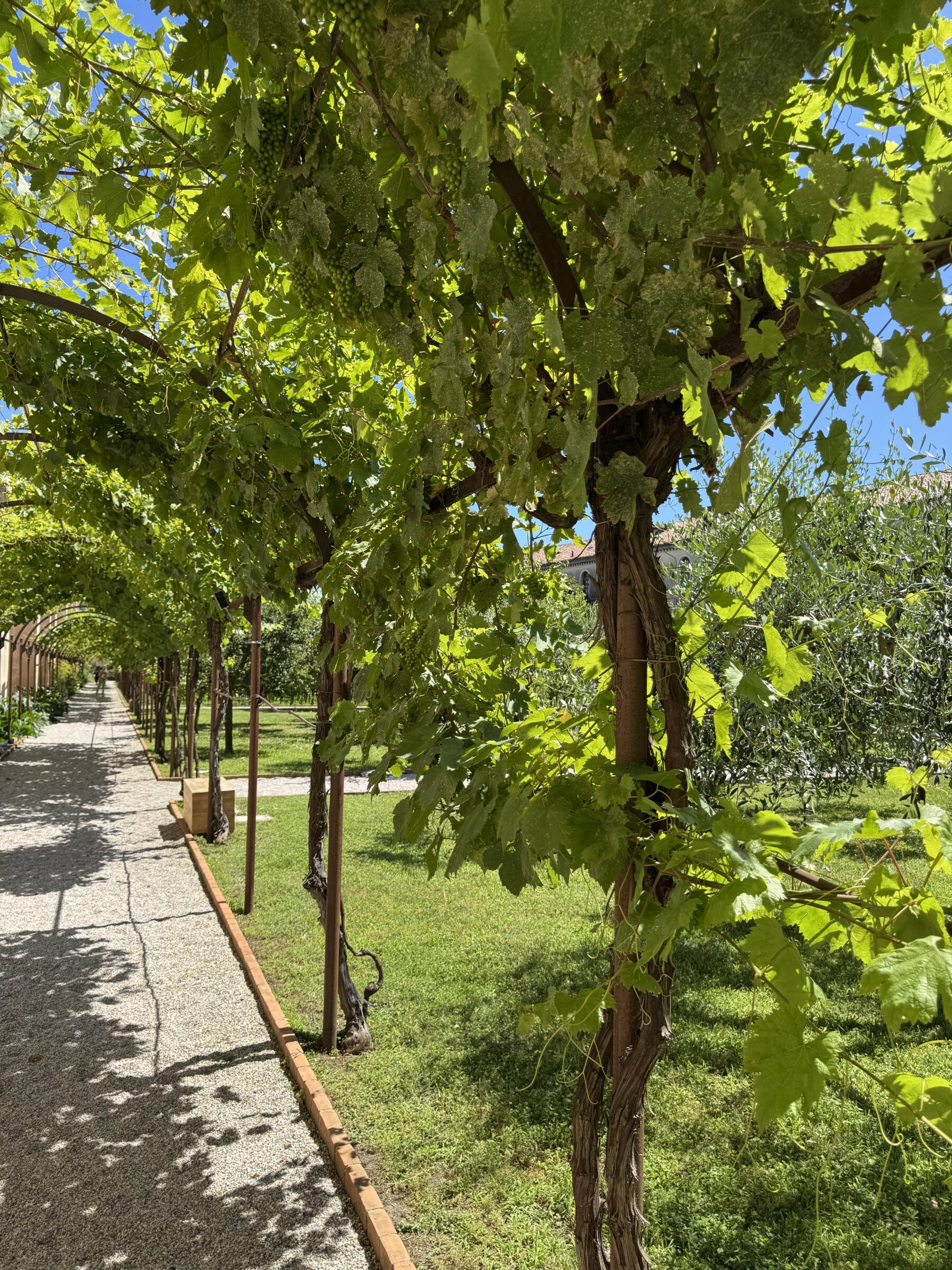
The outstanding Holy See Pavilion, entitled The Ear is the Eye of the Soul, features a sound installation inspired by the 12th-century mystic and composer Saint Hildegard of Bingen. Curated by Hans Ulrich Obrist and Ben Vickers, the pavilion invites visitors into an experience of listening, contemplation, and spiritual attentiveness. It unfolds across the Giardino Mistico dei Carmelitani Scalzi (Mystical Garden of the Discalced Carmelites), bringing together artists, musicians, poets, and monastic voices in dialogue with Hildegard’s enduring vision of creation as a living, interconnected whole. At a moment when contemporary culture is often defined by speed and distraction, the pavilion proposes silence and listening as radical acts. Drawing upon Hildegard’s understanding of music as a bridge between the human and the divine, the exhibition explores sound not simply as an aesthetic medium but as a form of spiritual knowledge. Through sonic works by figures including Patti Smith, Brian Eno, and FKA Twigs, alongside the chants of Benedictine nuns, the pavilion asks how art might restore our capacity for wonder, attention, and encounter. More than a national pavilion, The Ear Is the Eye of the Soul stands as a rare example of contemporary art engaging theology, mysticism, and contemplation not as historical subjects, but as living resources for imagining a more attentive and humane world.
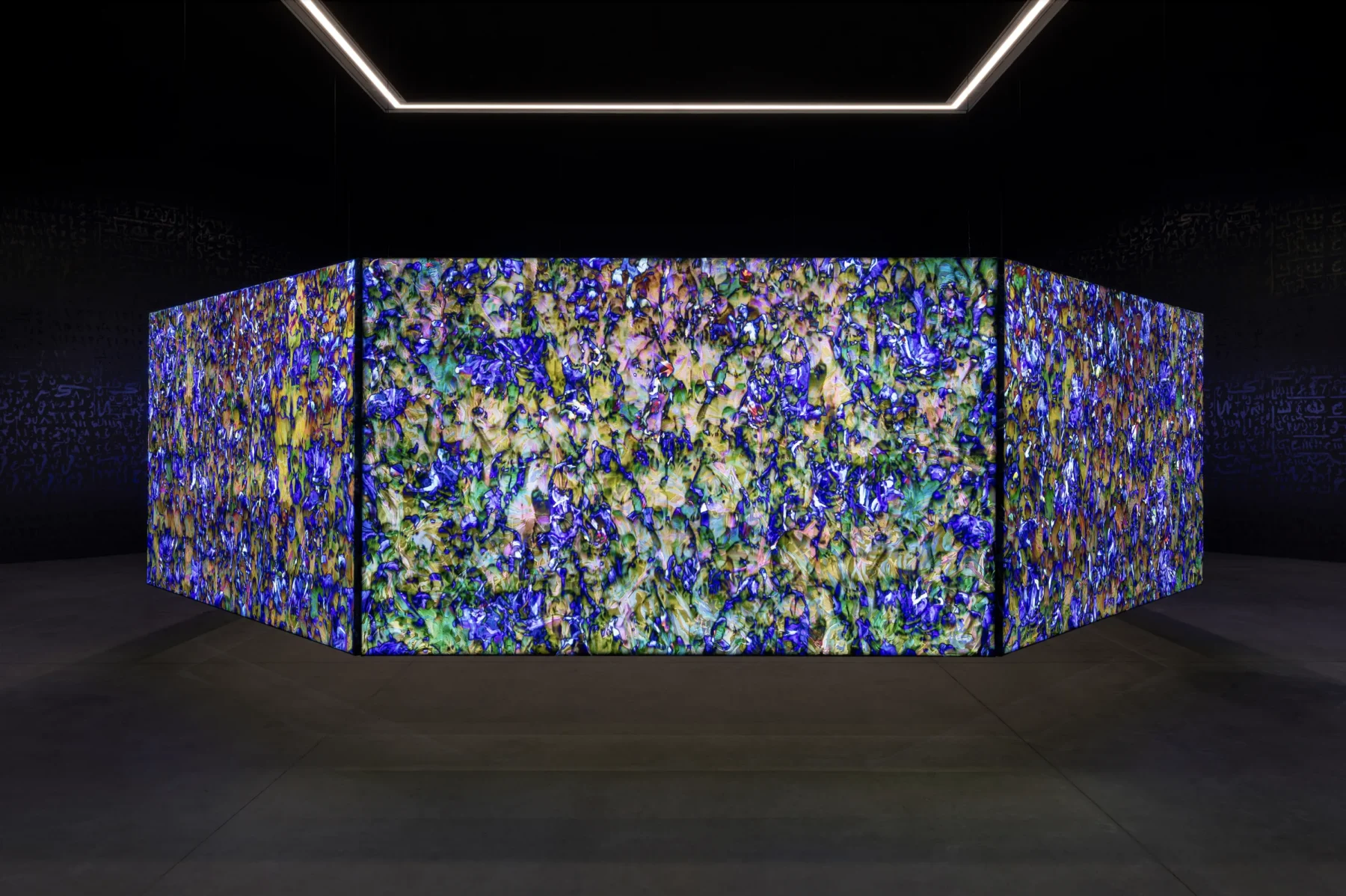
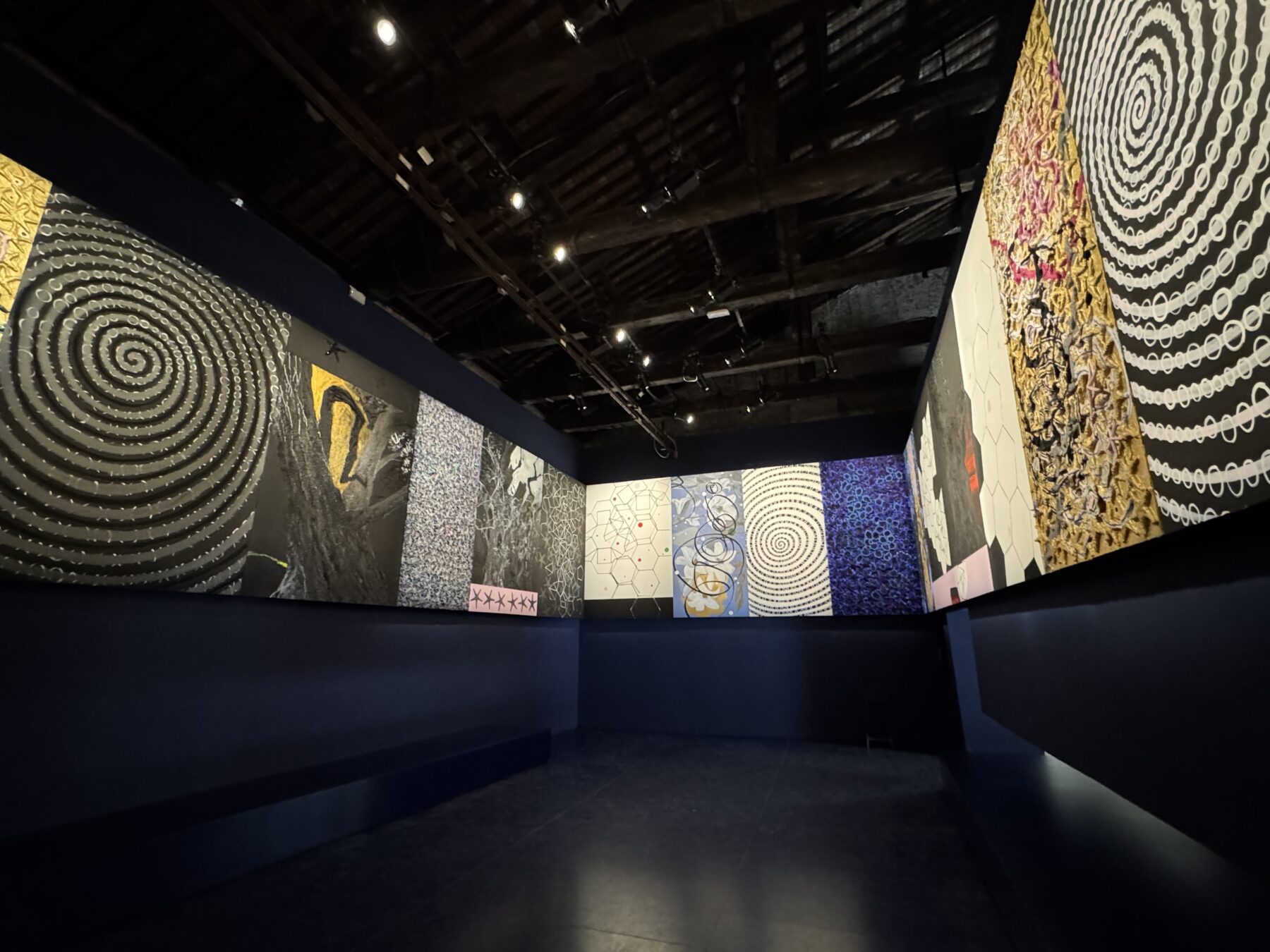
Among the most spiritually resonant presentations at this year’s Venice Biennale is the Australian Pavilion, where artist Khaled Sabsabi transformed the space into an environment of contemplation, sound, and mystical reflection. Drawing upon Sabsabi’s longstanding practice as a seeker within the Sufi tradition of tasawwuf, conference of one’s self invites visitors into a collective journey of spiritual inquiry. At the center of the pavilion, eight monumental paintings form an octagonal structure inspired by The Conference of the Birds, the celebrated 12th-century Sufi allegory in which birds undertake a transformative search for divine truth. Projected moving images and meditative sound unfold across the paintings, creating an immersive environment that evokes spiritual passage and the possibility of enlightenment. Numerology, mysticism, and cosmological symbolism are woven throughout the installation, with the number eight functioning as a symbol of harmony and transcendence.
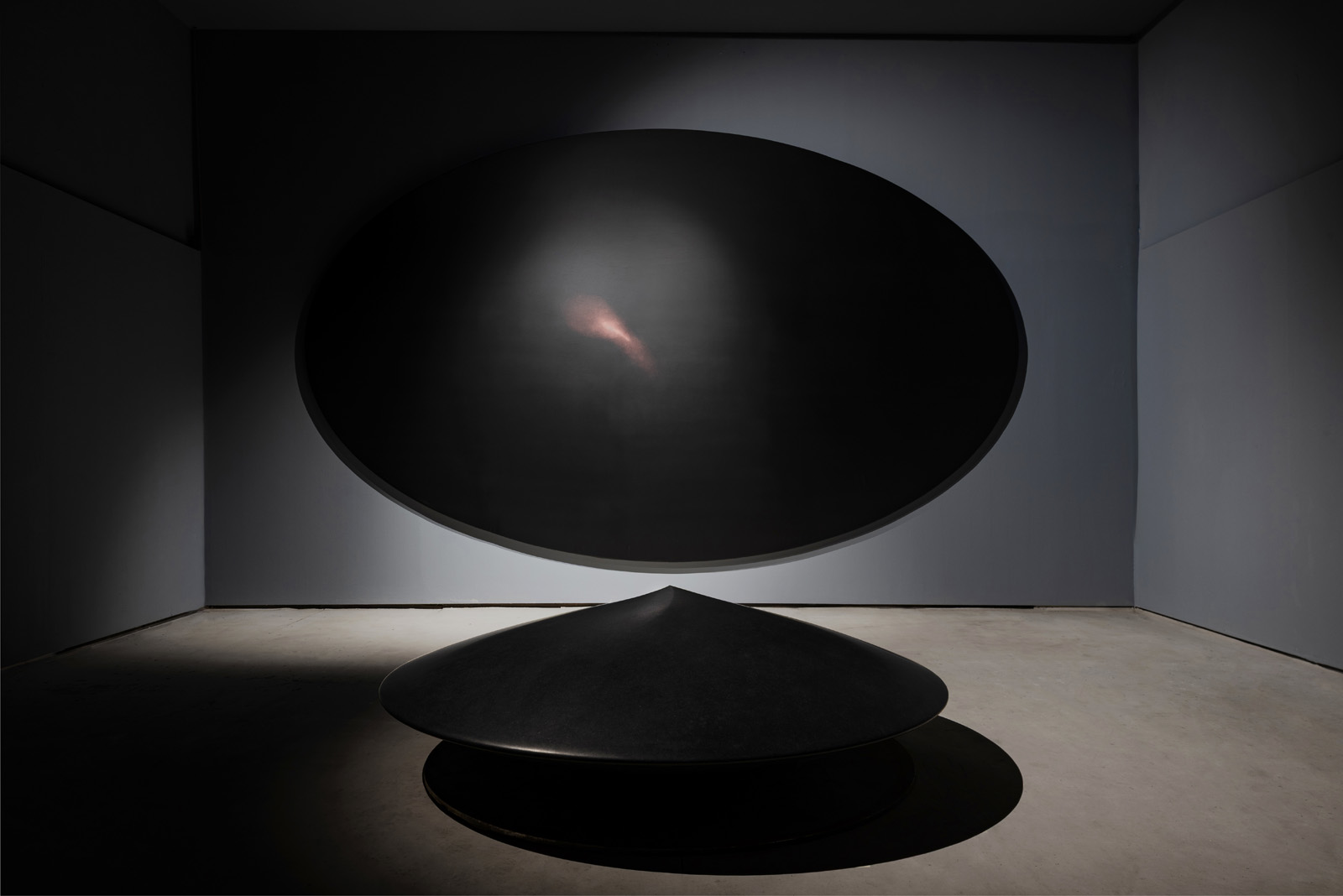
In the Egypt Pavilion, Armen Agop’s Silence Pavilion: Between the Tangible and the Intangible invites viewers into a meditation on time, silence, and the enduring relationship between matter and spirit with the exhibition. Known for his smooth black granite and basalt sculptures, Agop creates forms that appear at once ancient and futuristic, grounding the pavilion in questions that have occupied spiritual traditions for millennia: What remains unchanged beneath the flow of time? How does stillness reveal deeper realities? Drawing inspiration from the Egyptian desert, ancient cosmologies, and his own interest in metaphysical inquiry, Agop treats stone not as inert material but as a vessel of presence. His sculptures seem to hover between human artifact and natural formation, suggesting a realm where distinctions between the earthly and the transcendent begin to dissolve. Throughout the pavilion, silence functions almost as a medium in itself. Rather than offering narrative or spectacle, Agop’s work encourages a slower mode of attention—one that recalls both monastic contemplation and ancient Egyptian understandings of permanence, transformation, and the soul’s passage through time.
In the Applied Arts Pavilion, Gala Porras-Kim considers the lives of cultural and religious objects once they enter the museum. Working with drawings, sculpture, and video, she reveals how acts of conservation are never neutral. Every decision to restore, preserve, classify, or display an object also reshapes its meaning. For viewers interested in spirituality, Porras-Kim’s work invites deeper reflection. What happens when ritual objects are separated from the ceremonies, communities, and beliefs that gave them life? Can an object created for prayer or devotion remain fully itself when it is preserved primarily as history or art? Her work suggests that sacred objects are more than material artifacts—they carry relationships, memories, and forms of knowledge that cannot always be catalogued or conserved. In a world preoccupied with preserving the past, Porras-Kim reminds us that true stewardship may require attending not only to objects themselves, but also to the invisible worlds of faith, ritual, and meaning that continue to surround them.
The Lebanese Pavilion unfolds as a meditation on creation, memory, and human finitude. In Don’t Get Me Wrong, artist Nabil Nahas transforms the pavilion into an immersive landscape of branching, fractal forms that evoke the generative patterns of the natural world while situating humanity within the cosmic order. As the Biennale notes, the project becomes “a meeting point between art, culture and spirituality,” inviting contemplation of “the fragility of humankind” within the immensity of creation. Nahas’s paintings draw upon Lebanon’s layered cultural inheritance—Greco-Roman, Byzantine, Judeo-Christian, and Islamic—without reducing these traditions to historical references. Instead, they become visual languages through which creation is understood as interconnected, abundant, and continually unfolding. Nature emerges not merely as subject matter but as a site of revelation, where beauty gestures beyond itself toward mystery. Don’t Get Me Wrong offers a quiet theology of attention, reminding us that the experience of the sacred often begins with recognizing our own smallness.
In the Hungary Pavilion, Endre Koronczi’s pneuma cosmic draws on the ancient concept of “pneuma”—breath as both spirit and life force—to imagine air as an invisible presence connecting humanity with the wider cosmos. Through ephemeral installations, the exhibition invites contemplation of the unseen, suggesting that our deepest connections are often those we cannot see but continually share.
Isabel Nolan’s Dreamshook in the Ireland Pavilion explores how we orient ourselves within a vast, uncertain universe, drawing together cosmology, deep history, religion, literature, and mythology. Through sculpture, painting, tapestry, and drawing, her work invites reflection on wonder, fragility, and the search for meaning.
Faig Ahmed’s The Attention, in the Azerbaijan Pavilion, confronts a contemporary dilemma: how to find meaning amid the chaos of information overload. Drawing on the medieval mystic Nasimi and the symbolic language of Hurufism, Ahmed weaves poetry, science, and traditional craft into immersive installations that invite contemplation as an antidote to social turbulence.
SATELITE EXHIBITIONS
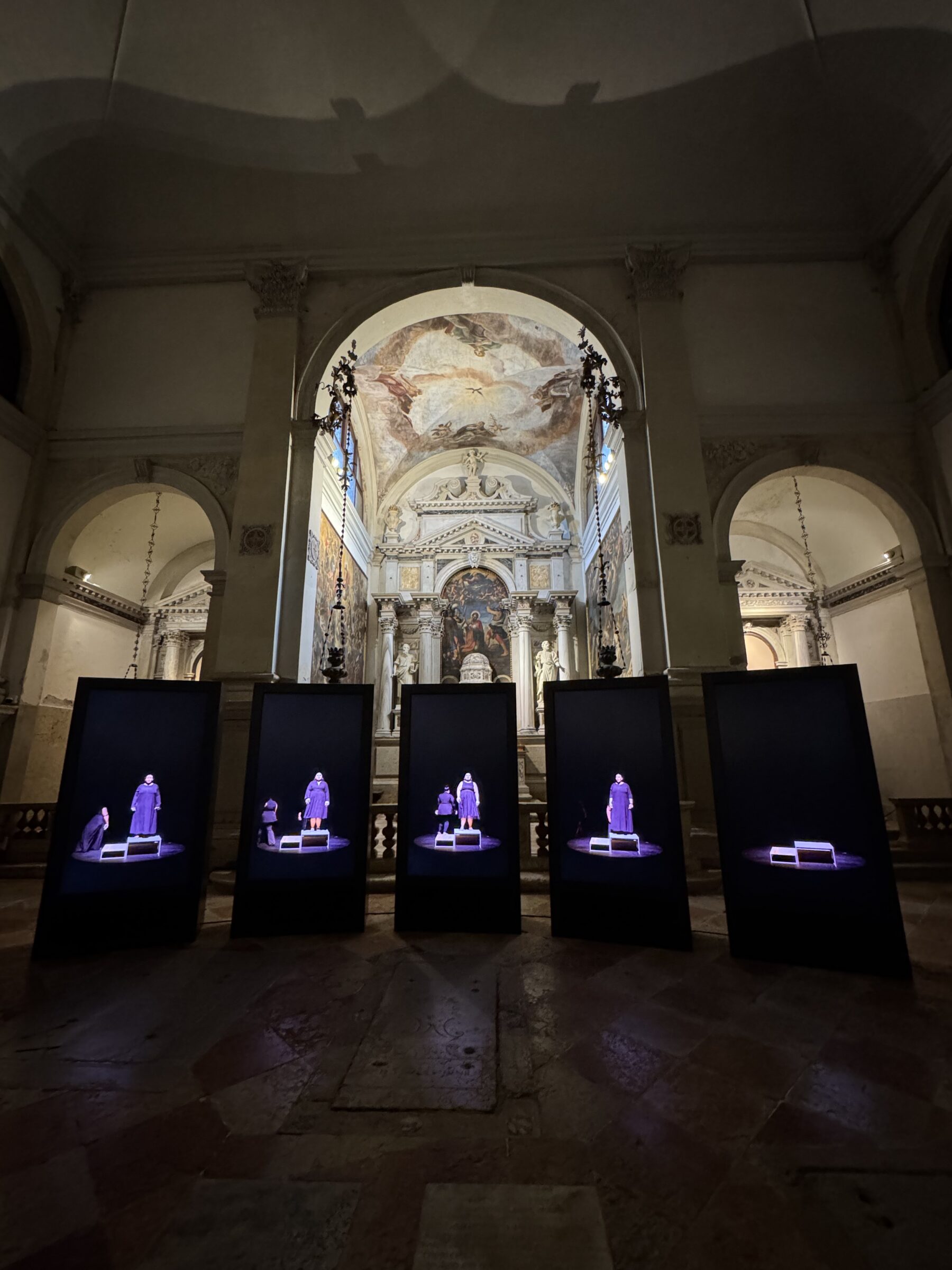
Gabrielle Goliath’s Elegy transforms mourning into a sacred practice of presence. Set within the historic Chiesa di Sant’Antonin in Venice, the immersive installation gathers three suites of performances in which seven women sustain a single continuous note, passing breath and voice from one another in an hour-long ritual of lament, remembrance, and care. For more than a decade, Goliath has developed Elegy as what she calls “a life-work of mourning”—a meditation on lives lost to violence that refuses spectacle in favor of tenderness. Each sustained tone becomes both prayer and vigil, affirming that grief is not a private emotion but a communal and ethical practice capable of binding strangers together across histories, geographies, and generations. Rather than seeking resolution, Goliath invites viewers to dwell within a shared breath that honors the dead while renewing our responsibility to the living.
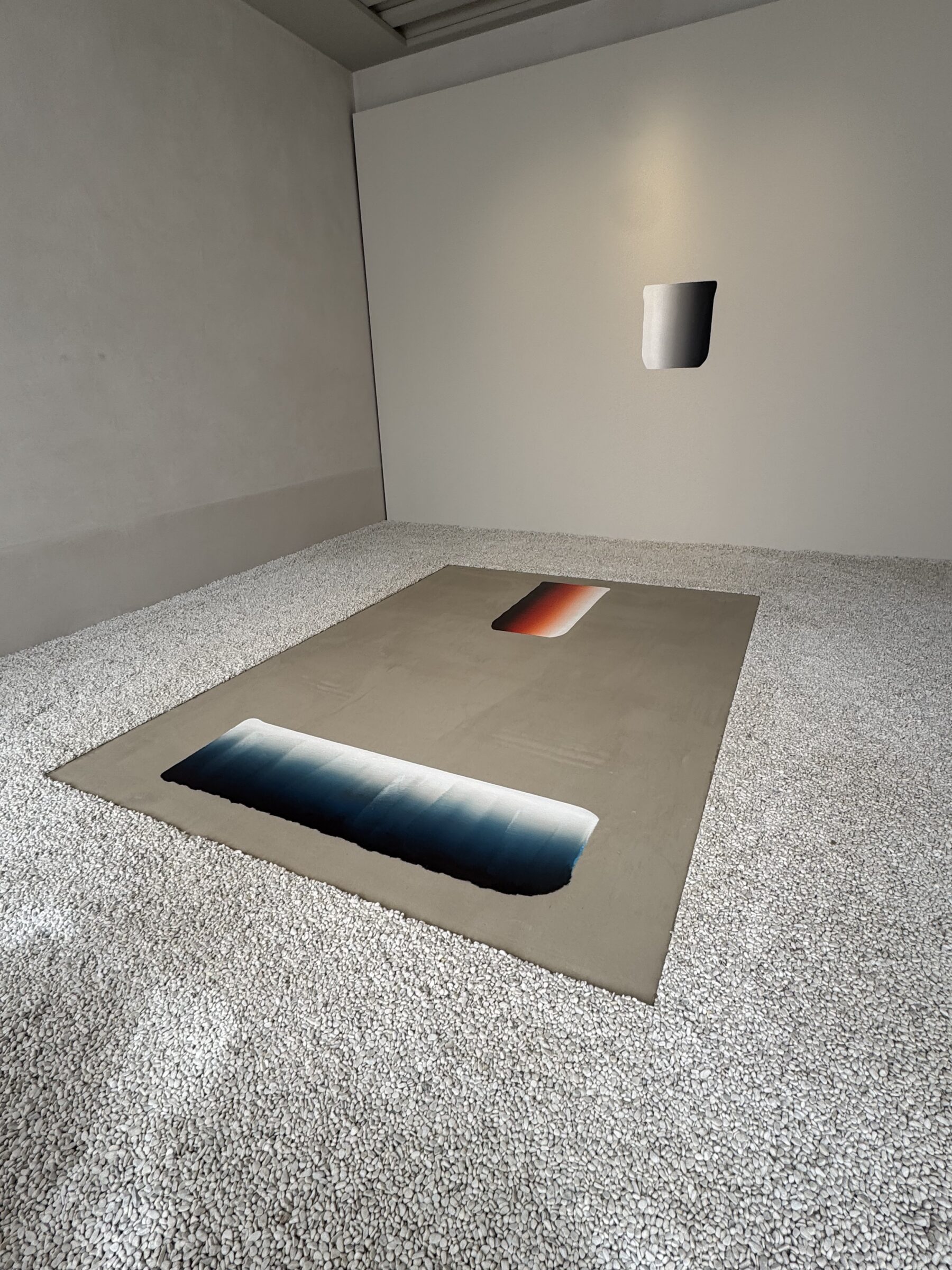
Lee Ufan‘s The Phenomenon of Expression—presented by Dia Art Foundation at the San Marco Art Centre—offers an invitation to slow down and attend to the space between things. Bringing together works spanning more than seven decades, the exhibition traces Ufan’s sustained investigation of gesture, material, emptiness, and the relationship between the artwork and the space that surrounds it. Ufan, one of the foremost figures of the Japanese Mono-ha (School of Things) as well as a key contributor to the Korean Dansaekhwa (Monochromatic Paintings) movements, has long explored the possibilities of embodying and representing space and time through painterly gestures on canvas. For Ufan, a stone is never simply a stone, nor is an empty space merely empty. His paintings and sculptures create encounters between the made and the unmade, presence and absence, human gesture and the independent existence of the world. In this sense, his work carries a distinctly contemplative dimension: meaning emerges not through explanation, but through sustained attention to what is already before us. His environments ask us to relinquish the impulse to master or interpret everything we see, and instead to become receptive—to interval, silence, material, and presence. In the midst of the extraordinary density of Venice, Ufan creates spaces for something much rarer: the possibility of simply being present.
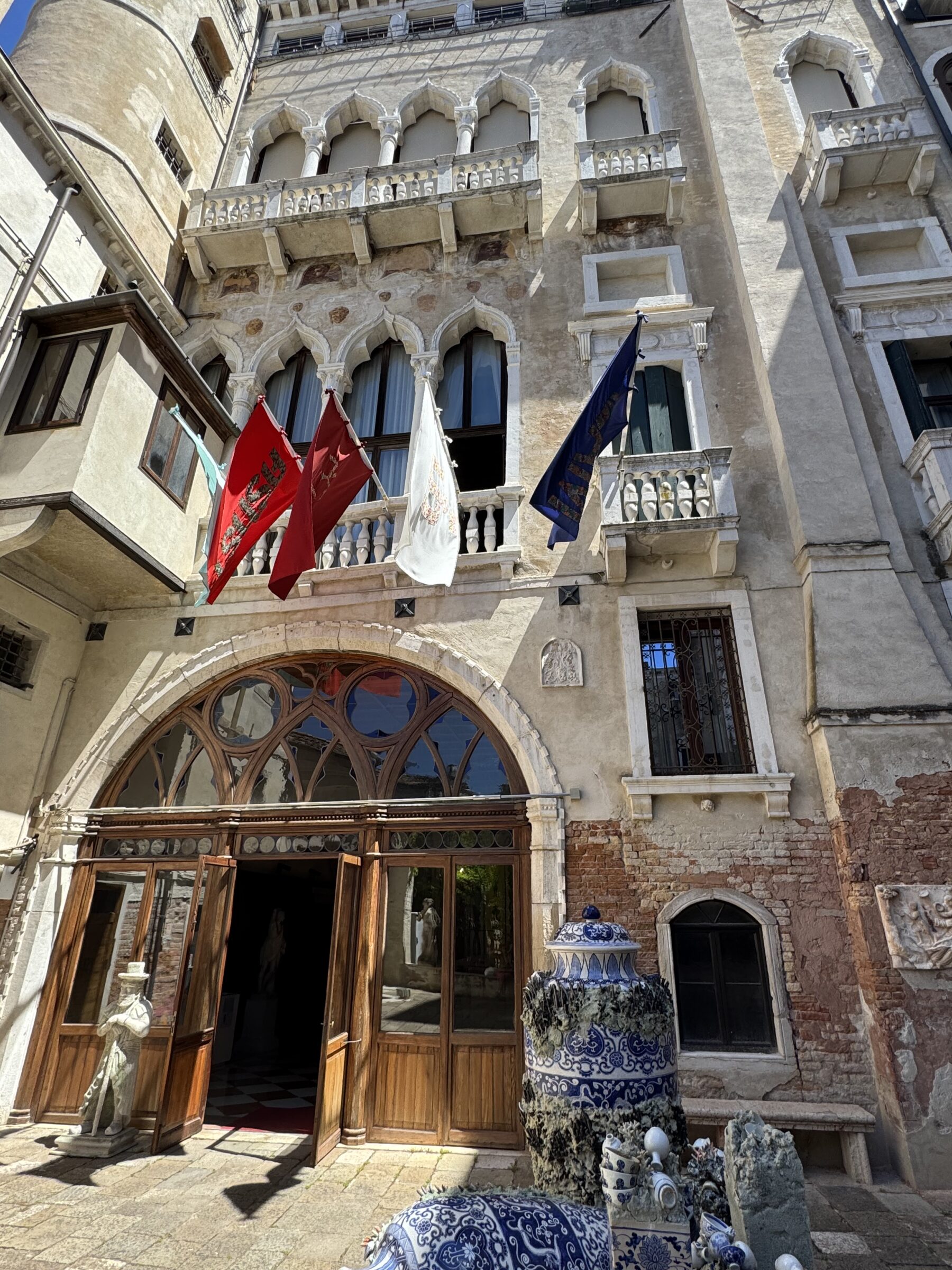
The group exhibition The Spirits of Maritime Crossing 2026 includes work by former FSA artist-in-residence Arahmaiani, whose practice has long demonstrated that spirituality is not only a subject for art but a way of inhabiting the world. Her work consistently weaves together spirituality, environmental stewardship, and social justice. Her ongoing Flags Project reminds us that spiritual life is inseparable from our responsibility to one another and to the earth, transforming art into a practice of collective care. The project has brought communities together in public processions where participants carry brightly colored banners bearing words such as “peace,” “love,” “soul,” and “nature” in many different languages. In Venice, Arahmaiani worked closely with a variety of community groups to create flags bearing words that reflect the daily social, environmental, and religious challenges of those places. Some of these flags are included in The Spirits of Maritime Crossing 2026, extending the project’s exploration of how art can bring communities together across differences. During her FSA residency in 2022, Arahmaiani created an iteration of the Flags Project in which volunteers carried flags throughout Charleston’s historic streets, pausing at churches, synagogues, landmarks, and other sacred sites, accompanied by a gospel choir.