Genesis Tramaine
A Self-Portrait
Throughout her residency, Genesis Tramaine remained committed to the daily exercises that have always guided and sustained her creative process. These include prayer, reading the Bible, sketching and writing in journals, and painting on small canvas boards.
Genesis Tramaine
A Self-Portrait
Throughout her residency, Genesis Tramaine remained committed to the daily exercises that have always guided and sustained her creative process. These include prayer, reading the Bible, sketching and writing in journals, and painting on small canvas boards. Following the success of her most recent exhibition in Dijon, France, she arrived in Charleston intending to explore new directions for her highly acclaimed abstract portraiture practice. Her rigorous devotion to her craft and the open-mindedness with which she approached the residency was evident in the range of works she produced in Charleston.
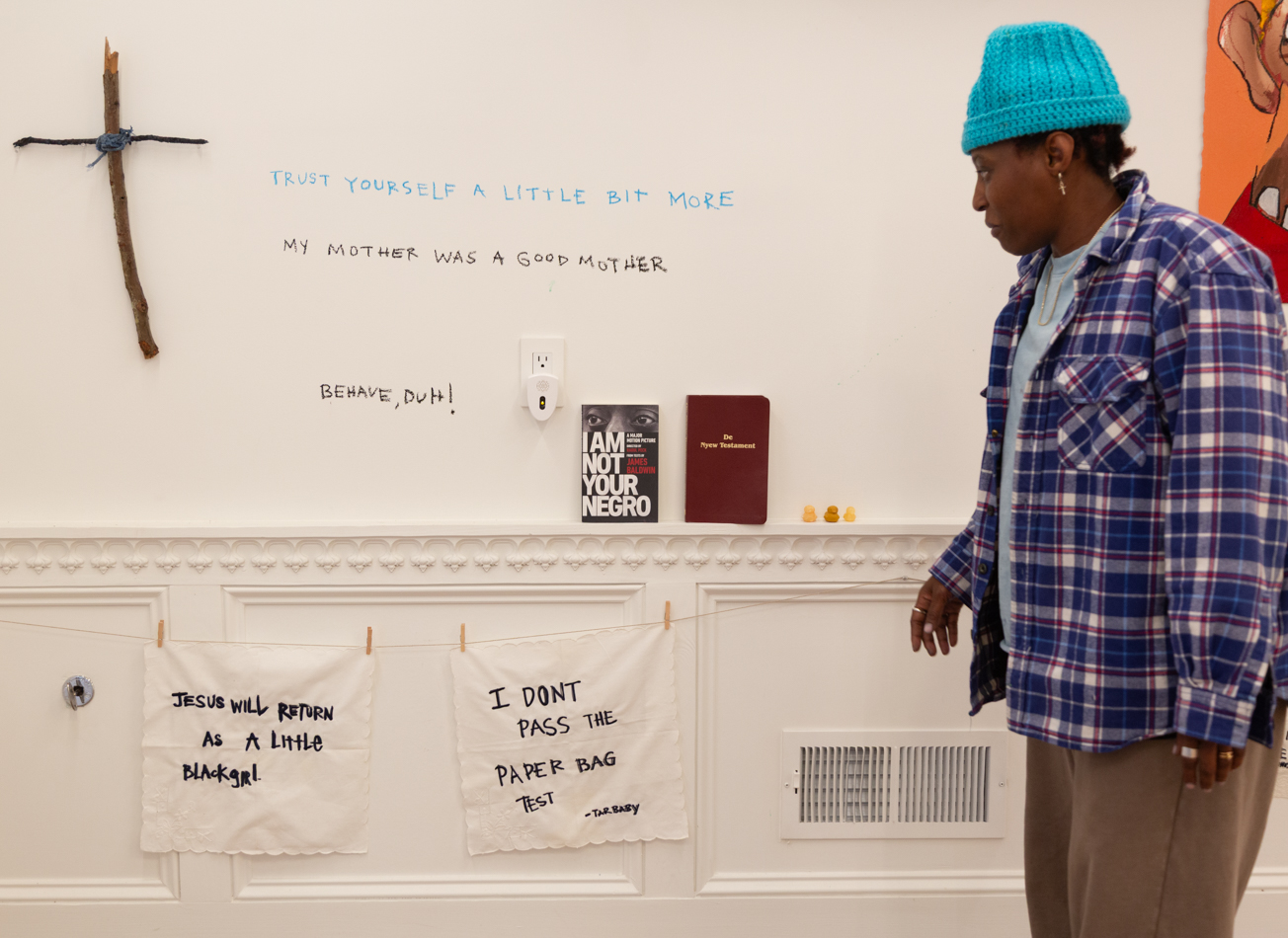
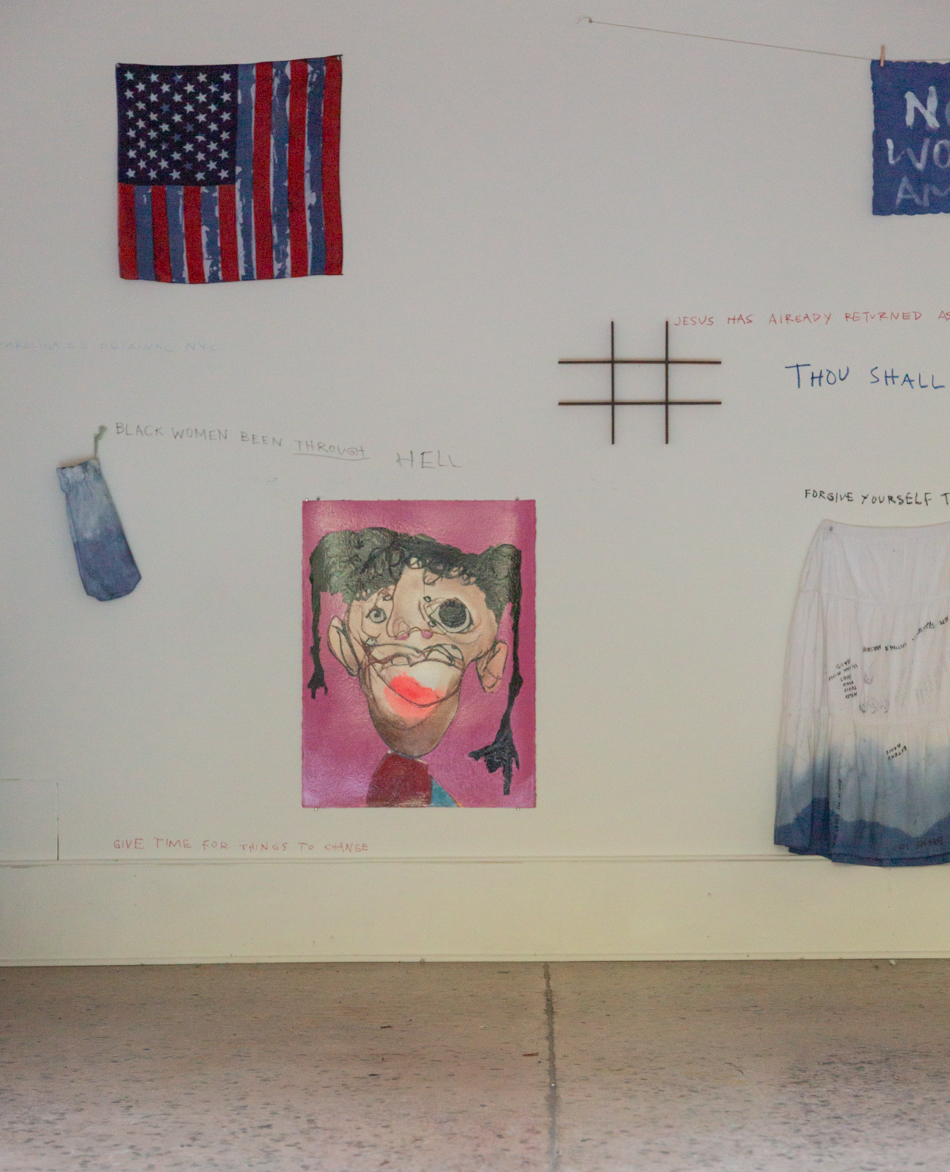
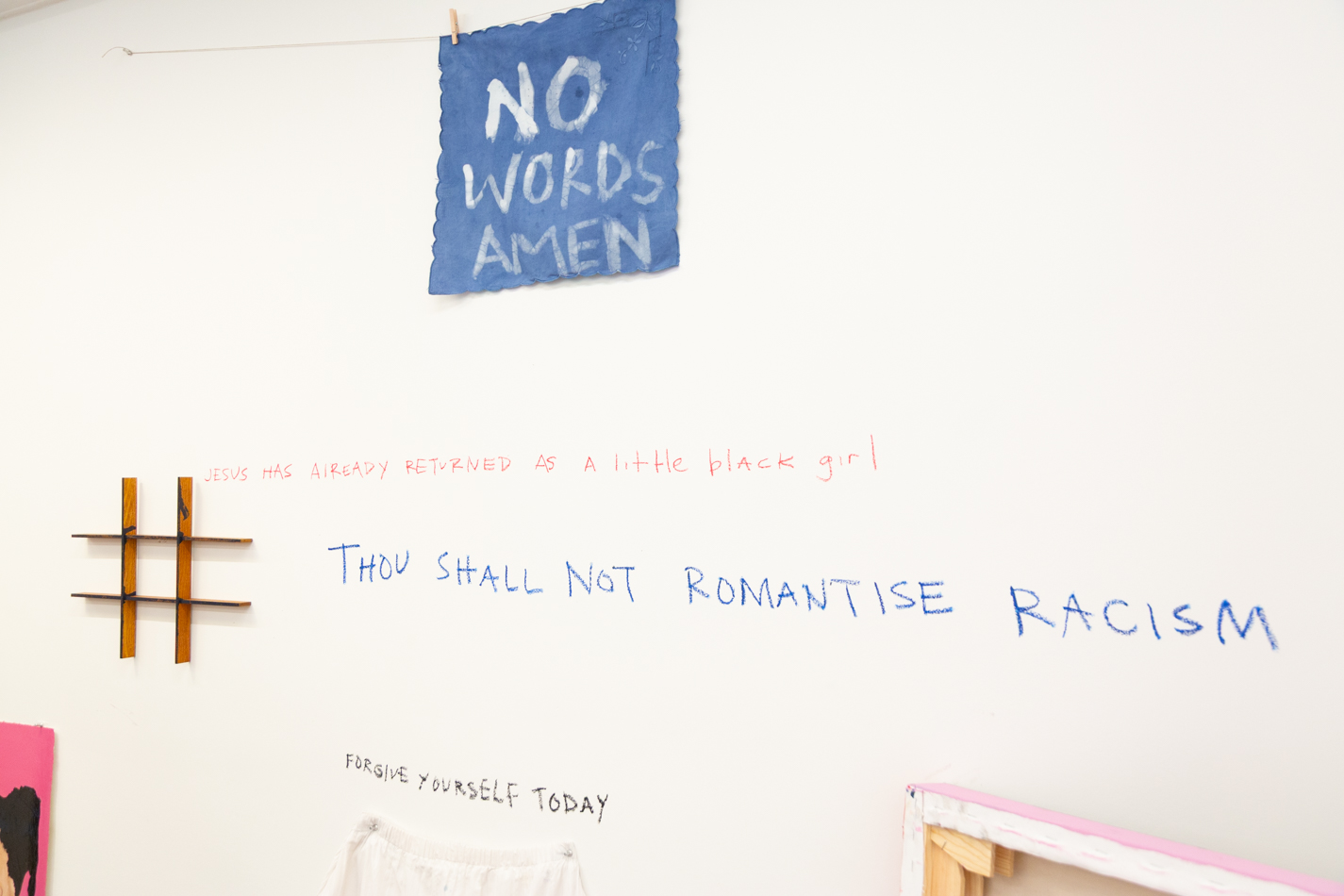
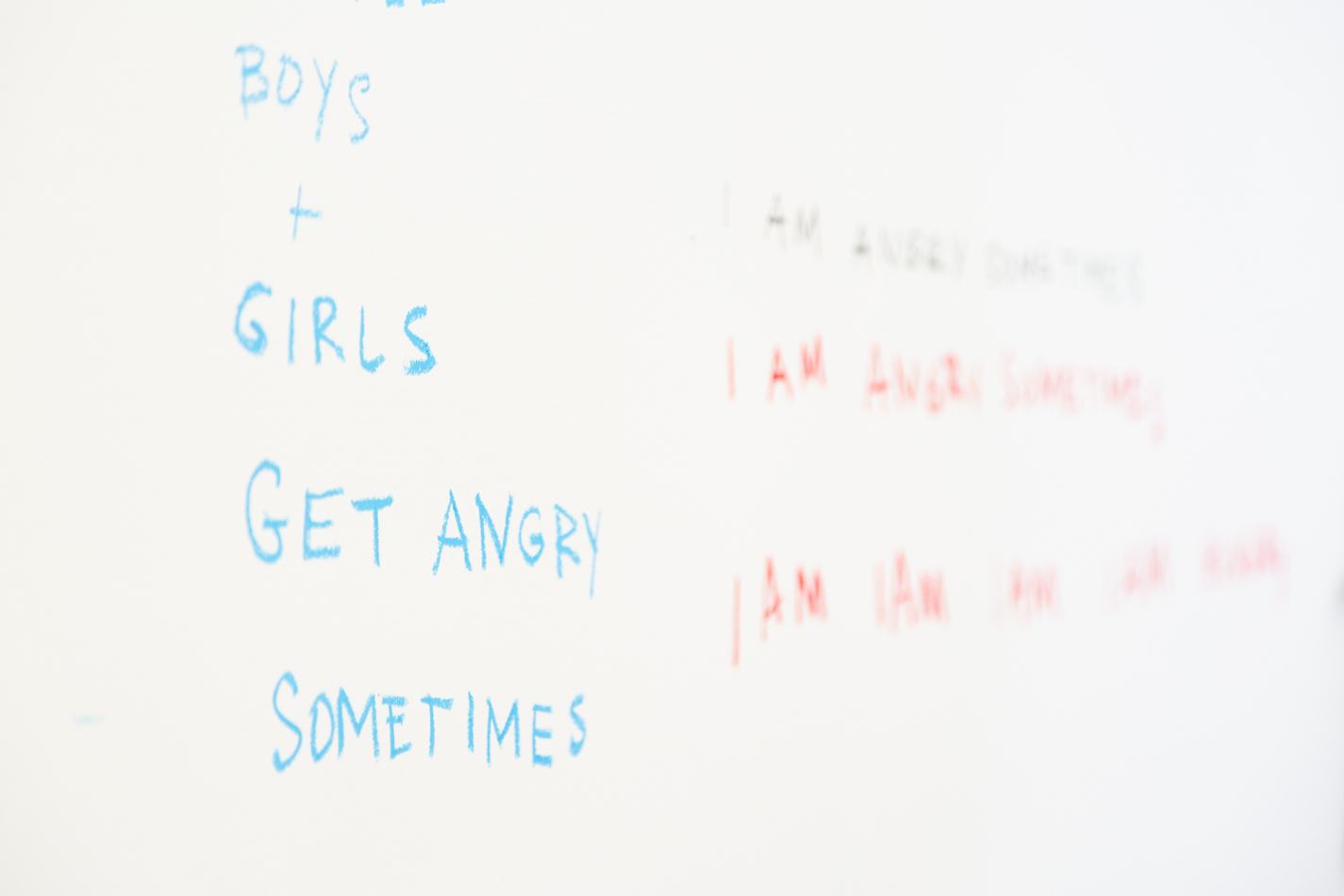
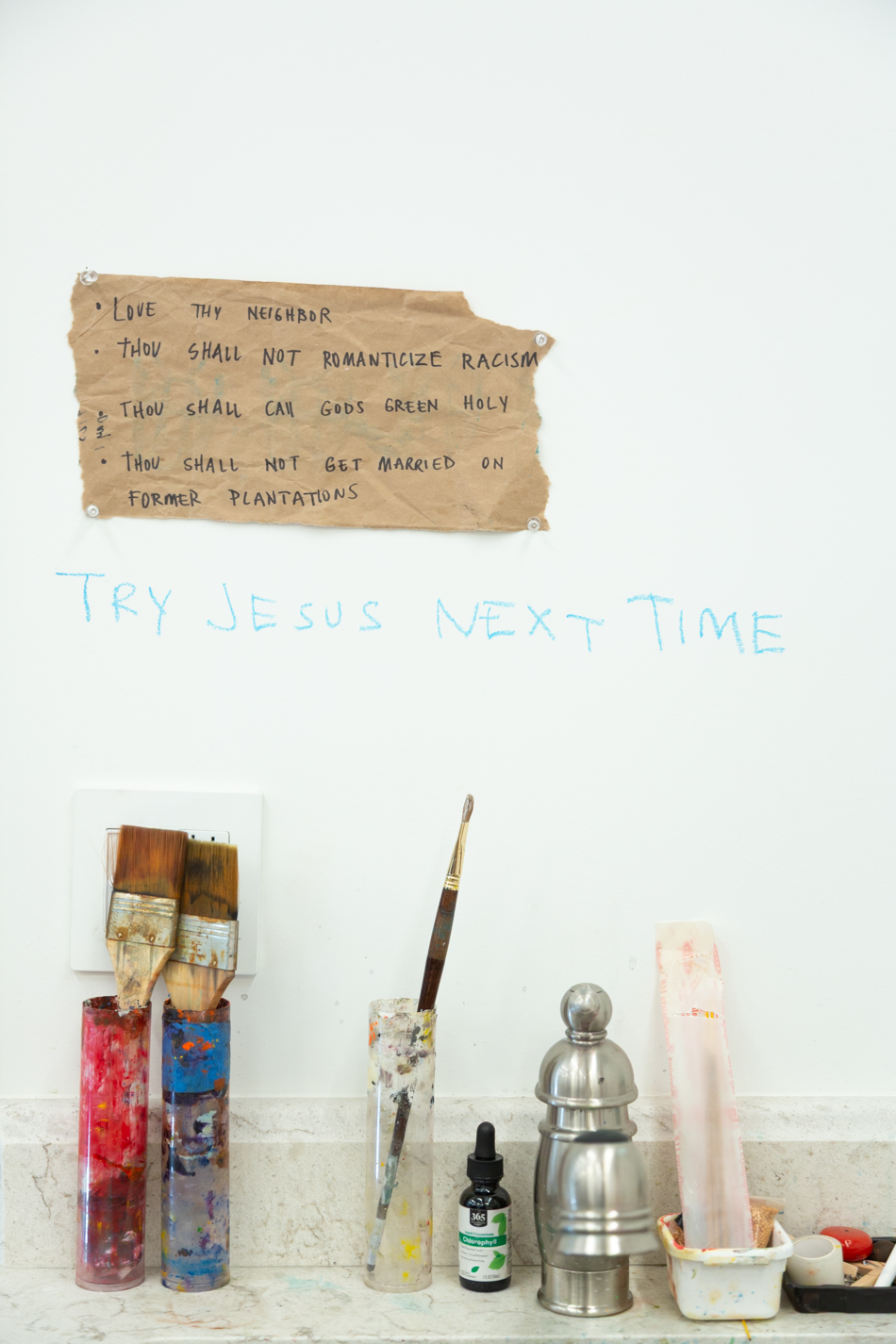
As installed in her studio, these artworks collectively constituted something of a self-portrait, a document of the artist’s time in Charleston as well as of her interior thoughts and physical presence throughout. From the very beginning of her residency, Tramaine began to write upon the walls—a bold extension into three-dimensional space of her journaling and of the phrases usually reserved for the sides of her canvases. Some words conveyed prayers or exhortations that sustained her studio efforts; some reflected upon the nature of Black female experience or of exclusion from social and church communities; and others revealed her reactions to being in the South. Amplifying the effects of the wall is the appearance of text on various artworks. Words are painted on the verso of a canvas stretcher, embroidered onto handkerchiefs, resist-dyed in indigo, and penned upon an indigo dip-dyed white skirt. Tramaine wore this skirt to Sunday services in Charleston and it is, in a way, emblematic of origins. She is a self-taught artist whose passions, skills, and vocabulary evolved from a childhood practice of sketching in hymn books and bibles while at church.
Tramaine pushed the boundaries of her practice while in residence. For the first time, she produced nearly full-length portrait figures, as in Nana’s Brothers, a painting depicting two of her uncles and representing her ancestral ties to South Carolina. In another departure, Tramaine produced a rare self-portrait remembering herself as a child. King Tide was inspired by a chance meeting with a local man who explained Charleston’s regular flooding. The blue background color, lines, and details—such as the teeth, contain biblical and topographical references. These portraits mark a departure from Tramaine’s typically large canvases in employing paper substrates, watercolor, and acrylic wash. In several works, Tramaine introduced local materials such as indigo and Carolina Gold rice into her painting media, which has always specified unique admixtures of substances—her so-called “putty”—as well as ineffable “materials” such as the Holy Spirit or Yeshua (Jesus).
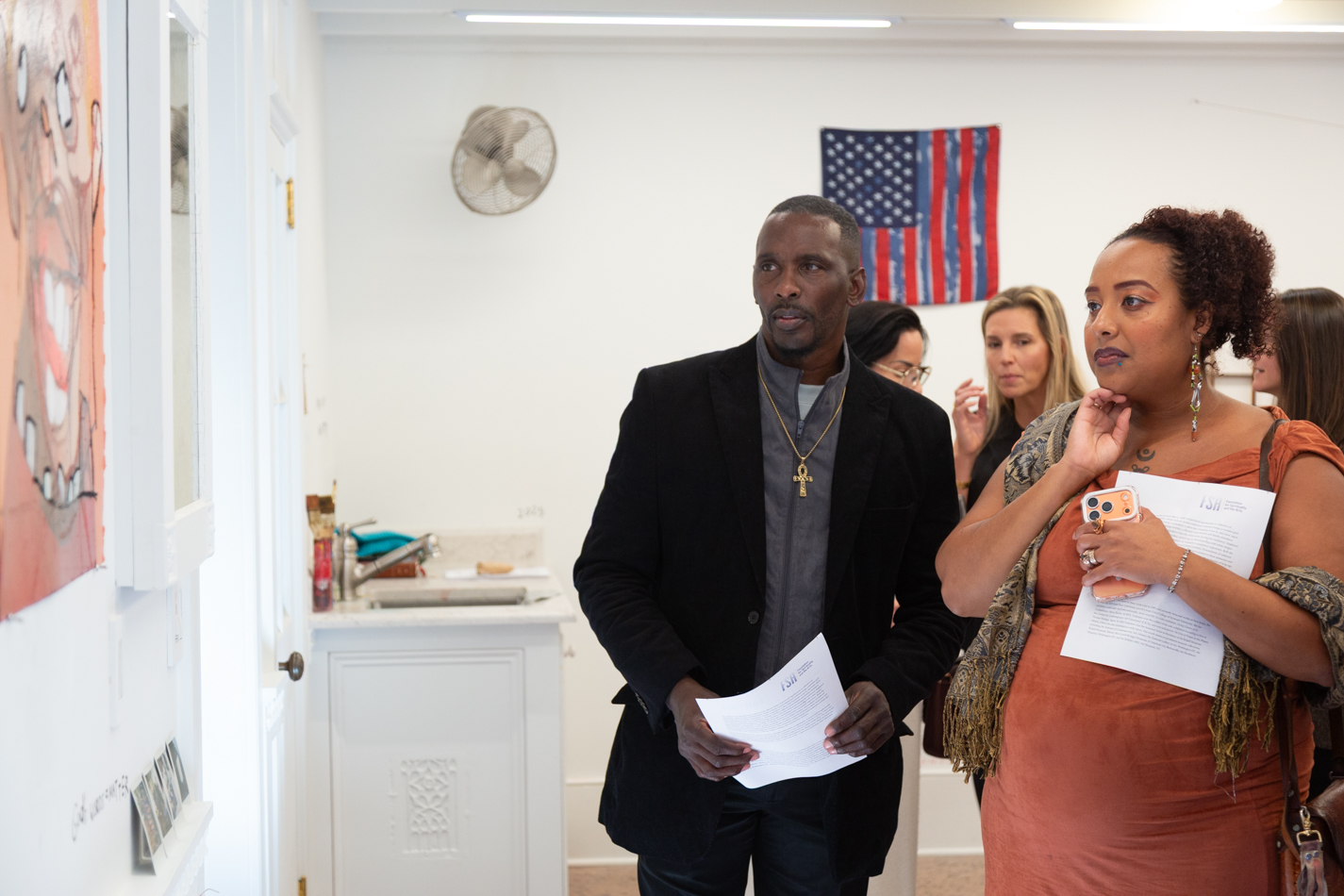
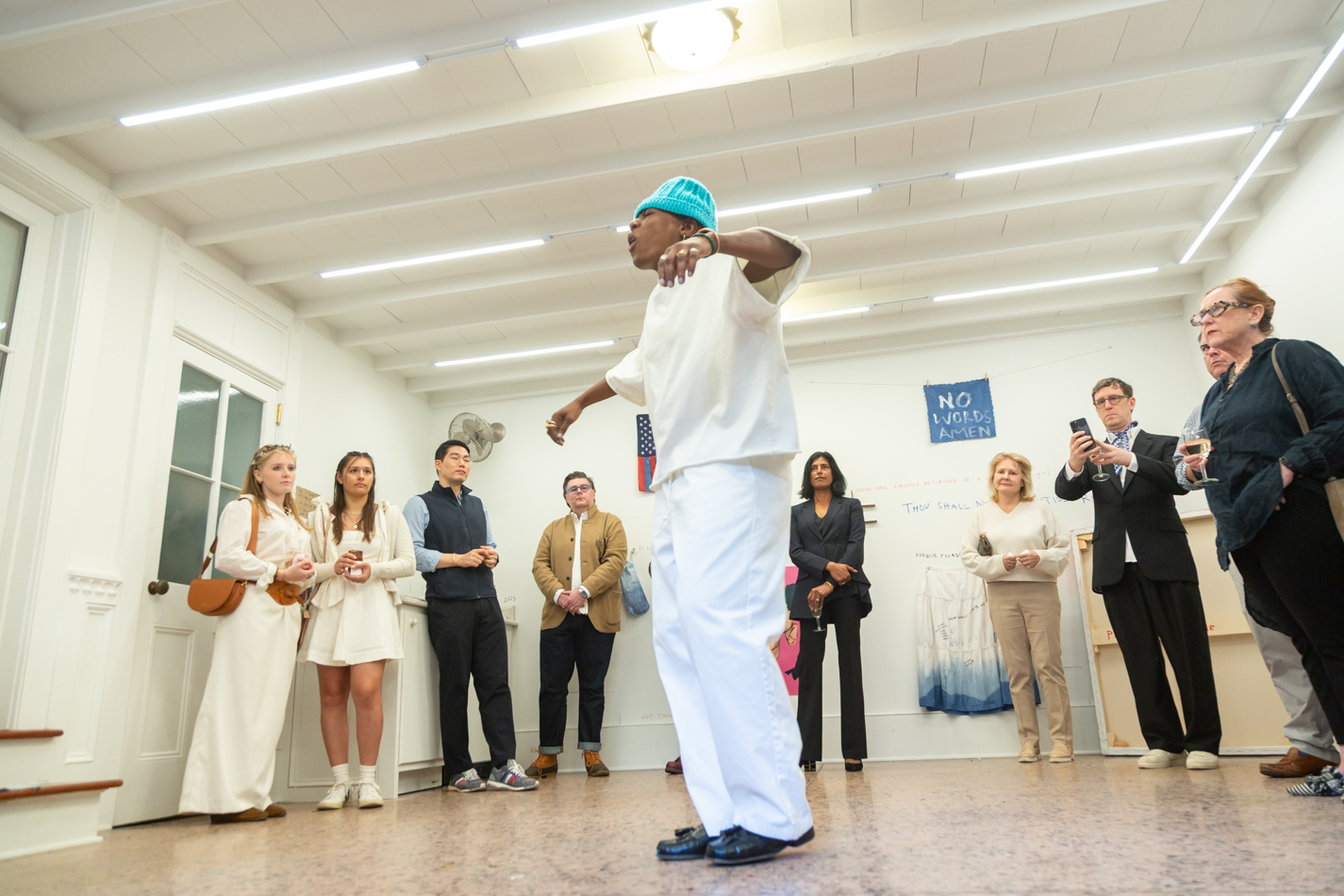
Indigo was, in fact, a steady feature of Tramaine’s residency experience as it constitutes an important substance in her recollections of family and history. Both the color and dye were also deeply symbolic in African belief systems which are preserved in the Lowcountry by descendants of enslaved populations who labored on indigo plantations. An American flag with white stripes dyed blue expresses Tramaine’s sensitivity to that history. A resist-dyed cloth reading “No Words Amen” manifests a personal struggle while providing terse commentary on the past. The selection on view in Tramaine’s studio, a fraction of the work she produced during her FSA residency, was a remarkable visual testament to her artistic process, exertions, experiments, and future trajectories.
Amina Ahmed
Creating a Sanctuary
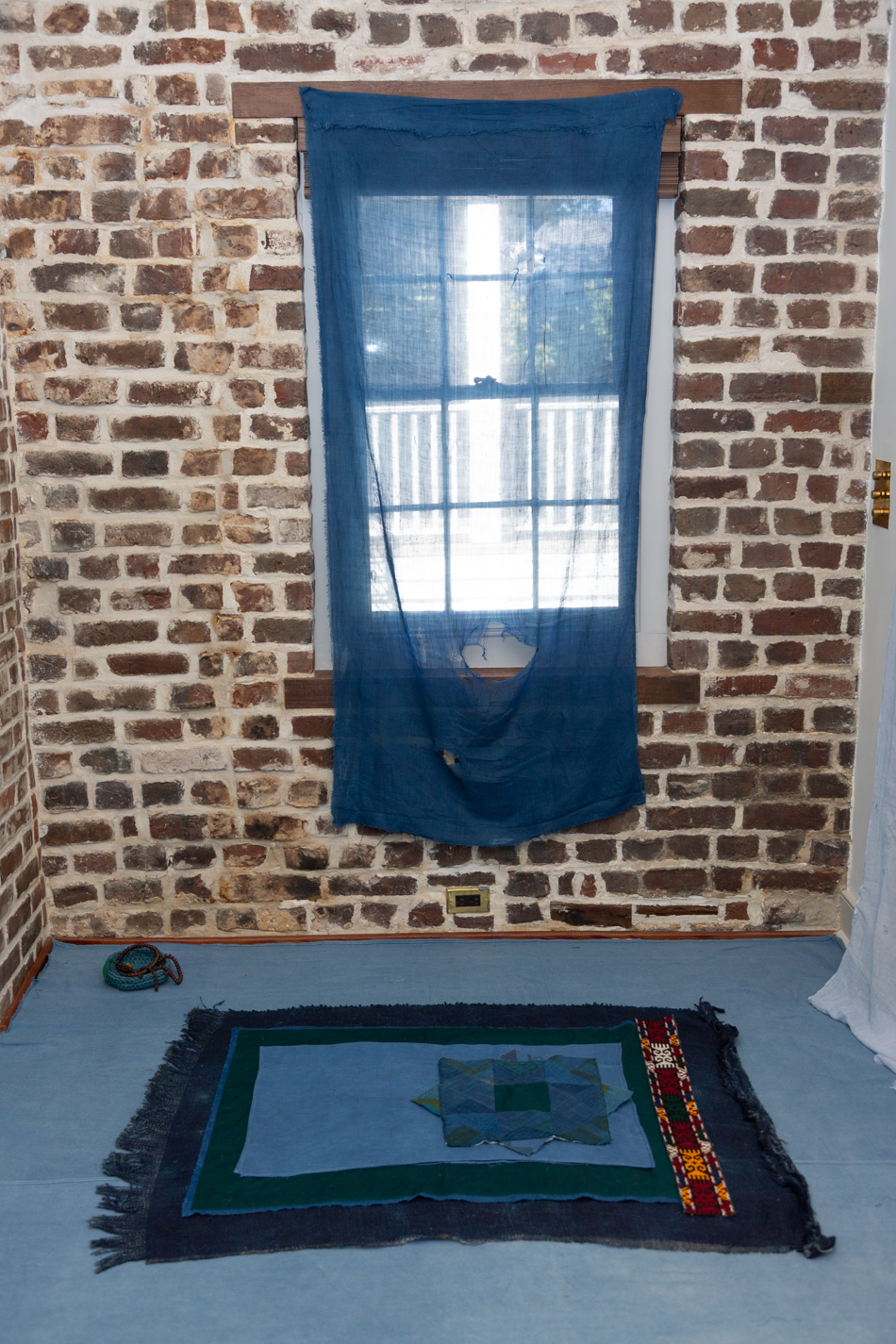
Amina Ahmed refers to her art as ‘site-specific drawing’ and her FSA studio offered a view of this writ large. The ‘drawings’ she produced conveyed several enduring aspects of her artistic practice: a sensitivity to pattern and color, a concern with textiles, and a commitment to collaboration. Ahmed, who is Muslim and was trained in Islamic traditional arts, approaches patterns from perspectives that are informed by geometry, particularly as grounded in the natural world. The universal nature of patterns has led her to consider geometry as a primordial artery, one providing a ‘reconnection to the origin.’
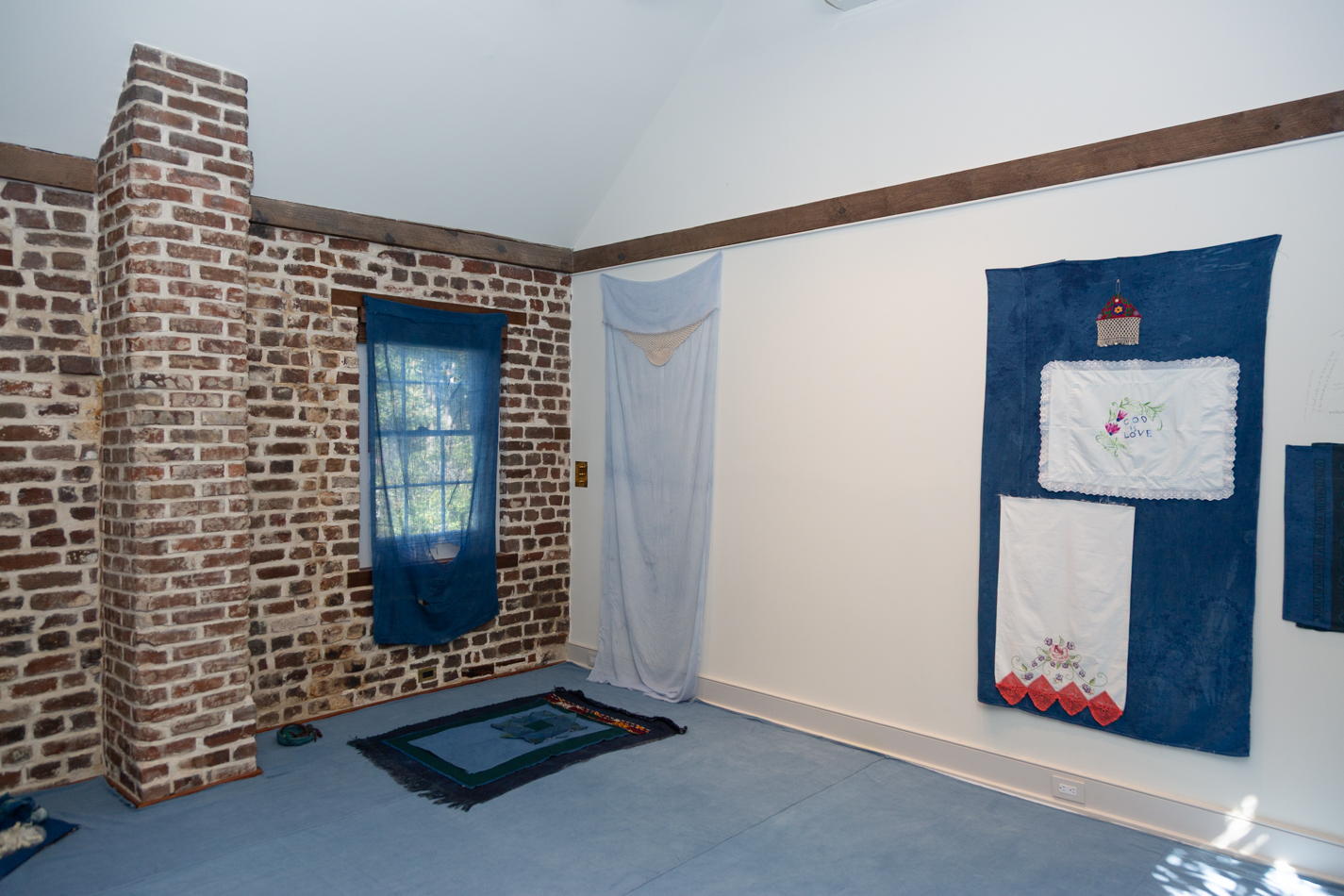
Ahmed has also long viewed color as a way of revealing spiritual connections that link diverse communities across time, space, and cultures. Her FSA explorations were rooted especially in the colors of indigo, continuing a decades-long project in which the artist has connected the spaces of her ancestry—India, West Asia, Africa—with the past and present histories of the dye. Indigo also represents a divine alchemy that aligns with Islamic color symbolism: green leaves (life, the Prophet, Paradise) are transformed into a blue dye (divinity, spirituality) that visibly manifests as green before oxidizing, under what can be construed as white or golden light (purity, divinity), into a permanent blue. Such associations informed Ahmed’s transformation of her studio into a sanctuary, or zawiya, effected with a floor covering of indigo-dyed cloth. This sense was further amplified by the fact that almost every textile in the studio had been dyed in indigo, its differing shades on both plain and printed cloths speaking to material differences as well as to acts of divine providence.
Ahmed arrived at FSA with a collection of textiles, old and new; some were collected during her travels, some were given to her by friends and family, and many were inherited from her late mother. With the exception of the floor covering, every ‘drawing’ in Ahmed’s studio incorporated these, in whole or in part. Such textiles, tangible expressions of ancestry and biography, are guides to Ahmed’s working process. Her childhood experiences among women, gathering to sew and quilt, have led her to embrace the potential of collaboration to explore what is shared amidst cultures, families, persons, memories, as well as what tethers the human and the divine.
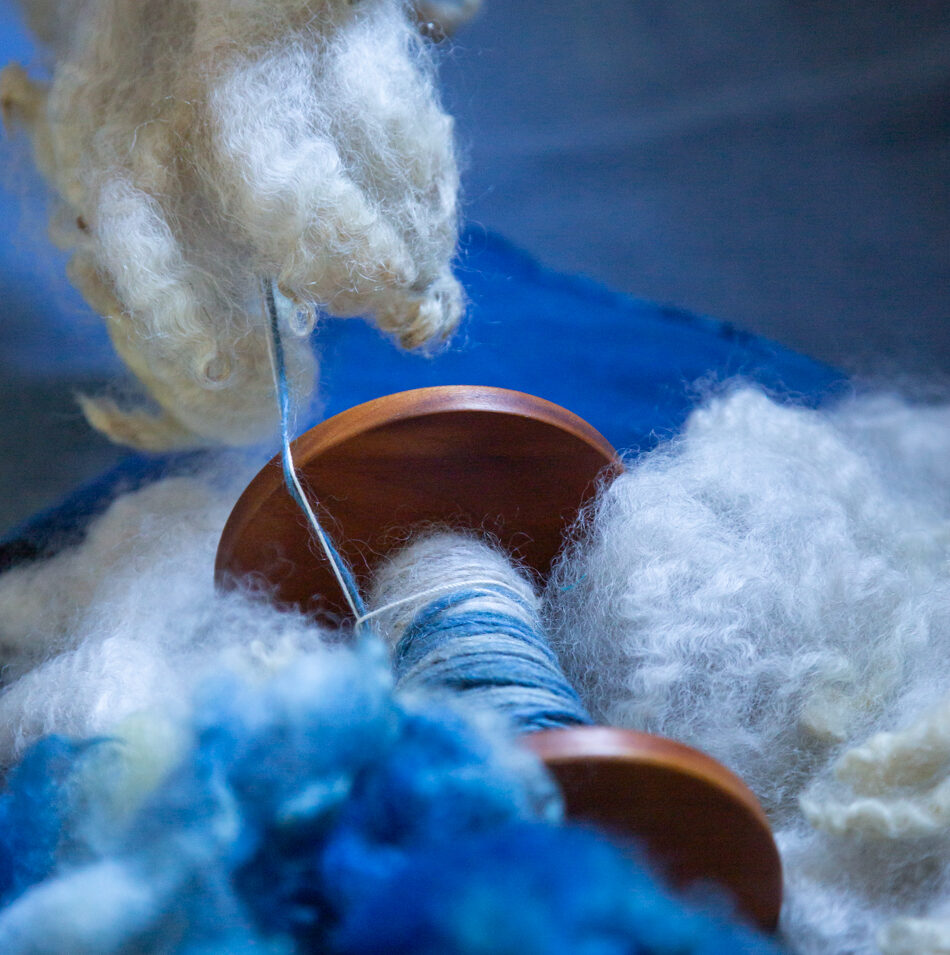
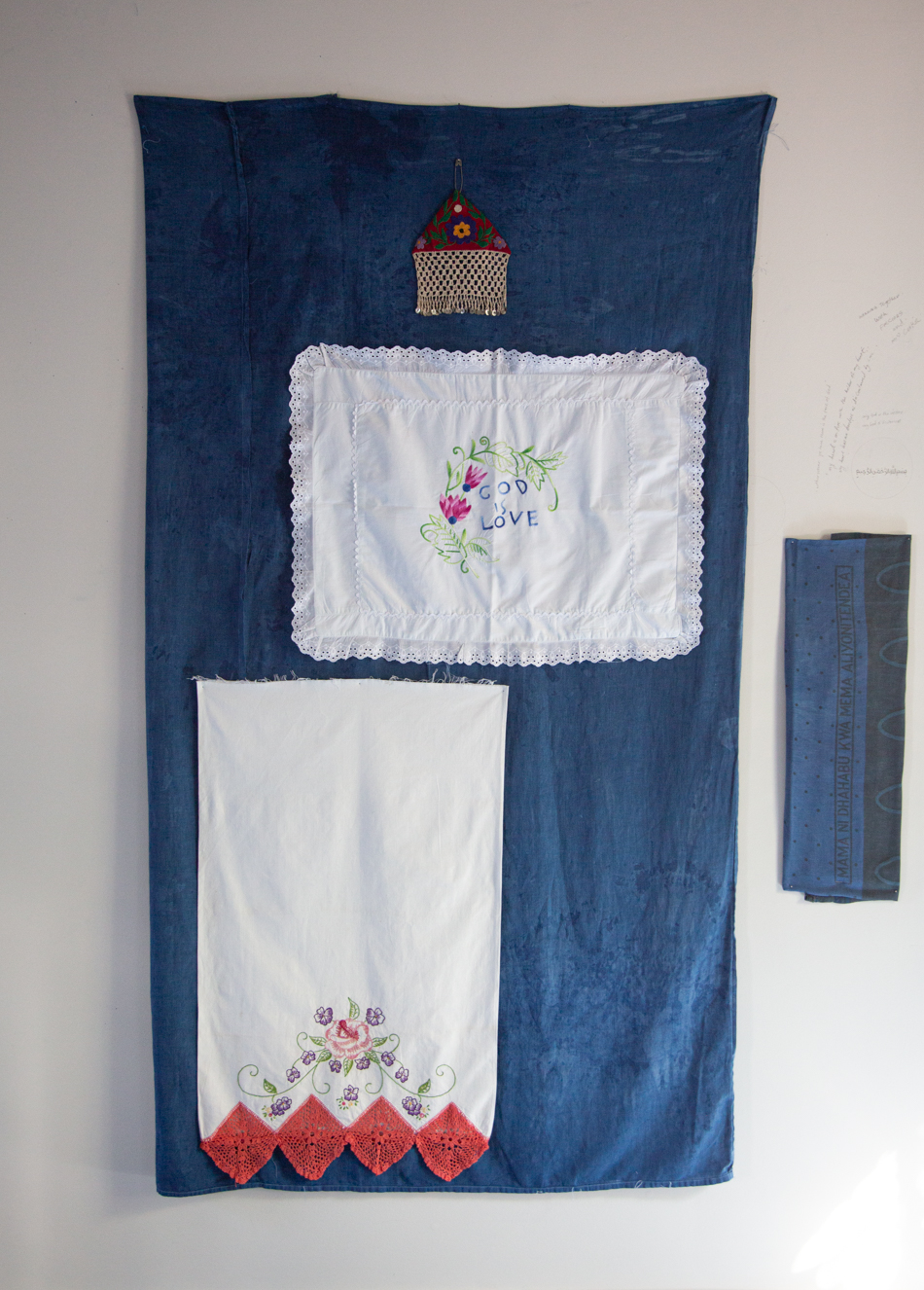
In Charleston, Ahmed embarked on an extraordinary collaboration with Precious Jennings, a textile and performance artist, also familiar with indigo, who was raised sewing and embroidering with her mother and grandmother. The works that Ahmed and Jennings created, in their layerings of cloth, color, pattern, seams, and stitches, trace a relationship of loving labor, and an interlinking of their personal histories, ancestries, and spiritual affinities. This was apparent in works such as Untitled (God is Love), which featured two pillowcases: one that Amina’s mother had embroidered with words at the time of the artist’s birth and the other embroidered with flowers by Jennings’ grandmother. Untitled (Kite), an exploration of geometry and the transformative aspects of indigo, was created from fabric squares and triangles pieced from the artists’ collections. The boldest statement of their collaboration was The Womb, the Reflection, the Shadow and the Cloak. The dark blue cloth extending from the ceiling, dyed with indigo from several local donors, had belonged to Ahmed’s mother. A golden yellow fabric attached behind it came from Jennings’ family. Together, the cloths referenced the cloak of the Virgin Mary as well as Islam, which holds blue and gold to be emblematic, respectively, of mercy and revelation. Of particular note in the studio was a drawing of suspended wool—in natural and indigo-dyed form—spun by Jennings. An important material in her own artistic practice, it gained additional meaning in the FSA studio/sanctuary. Wool, suf in Arabic, references aspects of Sufi teaching—the cultivation of interior practices in order to purify the heart and self—that has universal applications.