
Artist-in-Residence
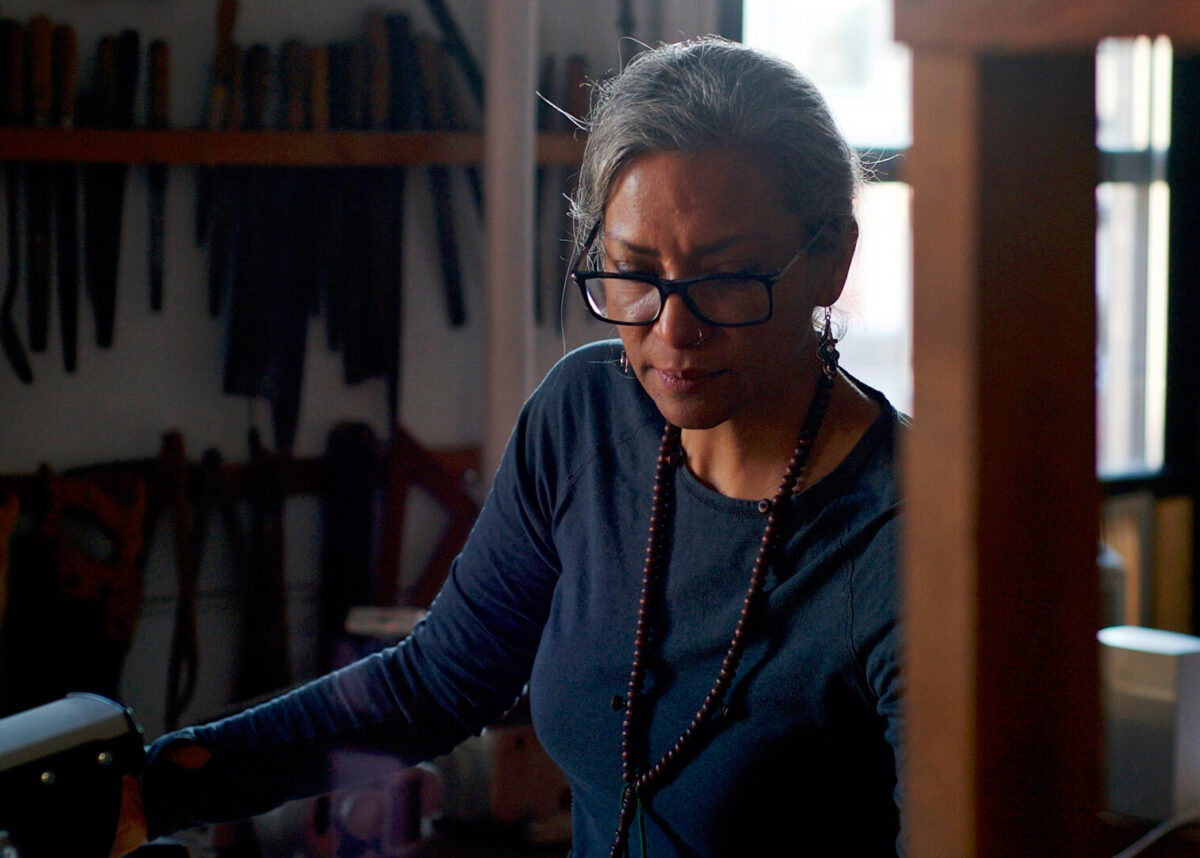
Amina Ahmed
Charleston, SC | Fall 2025
For some three decades, Amina Ahmed (b. 1964) has practiced and explored geometry from various standpoints, particularly as it relates to the natural world. The artist’s sensitivity to geometric forms derives in part from her educational background in Islamic and traditional arts. It informs her belief that patterns, rhythms, and shapes are inherent to life and give structure to physical reality. The universal nature of these patterns has led the artist to consider geometry as a primordial artery linking space, time, and culture. Ahmed’s artistic practice provides her with a ‘reconnection to the origin,’ her mark-making bearing the influence of ancestors who spanned cultures and ethnicities from Central to South Asia, and Africa.
While Ahmed employs a range of media and methodologies, she continues to return to textiles within her practice. Early childhood experiences among women, gathering to sew and quilt, have led her to look deeper into the urges and expressions of making. The forms, shapes, and color observed in these women’s textiles bring a lived quality to the formal technical architecture they reside within. Textiles and architecture, in their respective approaches, are weft with a shared objective—the axis of their renderings being the beauty they present in reality. It is through this perspective that Amina’s geometries convey a delicate blend of matrilineal craft practices with spirituality; they evoke what is shared amidst cultures, families, persons, memories, as well as what tethers the human and the Divine. Ahmed’s work in recent years has also entailed collecting oral histories of making with cotton, weaving, quilting, and natural dyes in India.
In Charleston, Ahmed collaborated with various individuals and local communities in order to engage with, share, and expand both her geometries and her explorations of textiles and natural dyes. Her past projects and current interests dovetailed with the work of several local indigo artists and cultivators and, shortly into her residency, she began a stunning collaboration with textile artist Precious Jennings. Both Ahmed and Jennings have personal collections of stitched and plain cloths, quilts, and embroideries from their respective mothers, grandmothers, and friends. As they harvested indigo plants at nearby farms and processed indigo dye, they cut, colored, refashioned, and repurposed these textiles into hangings, floorcoverings, and installations that spoke to a deeply spiritual act of communal making. Together, the artists conducted teaching workshops with schoolchildren on St. Helena Island and with young members of the Muslim community in Charleston. Local Muslim women assisted Ahmed with the Arabic lettering for a large banner, which she dyed with the noted artist Arianne King Comer. The Charleston residency provided Ahmed with another meaningful anchor in her lifelong exploration of plants, colors, pigments, and textile traditions that link disparate spaces, speak to diverse ancestries, and document histories of migration.
About the Artist
Amina Ahmed (b. 1964, East Africa) is a multidisciplinary artist working across painting, printmaking, and textiles. Of Kutchi-Indian, Turkic, and Nubian heritage, she grew up in England and now lives in the USA.
Select Images

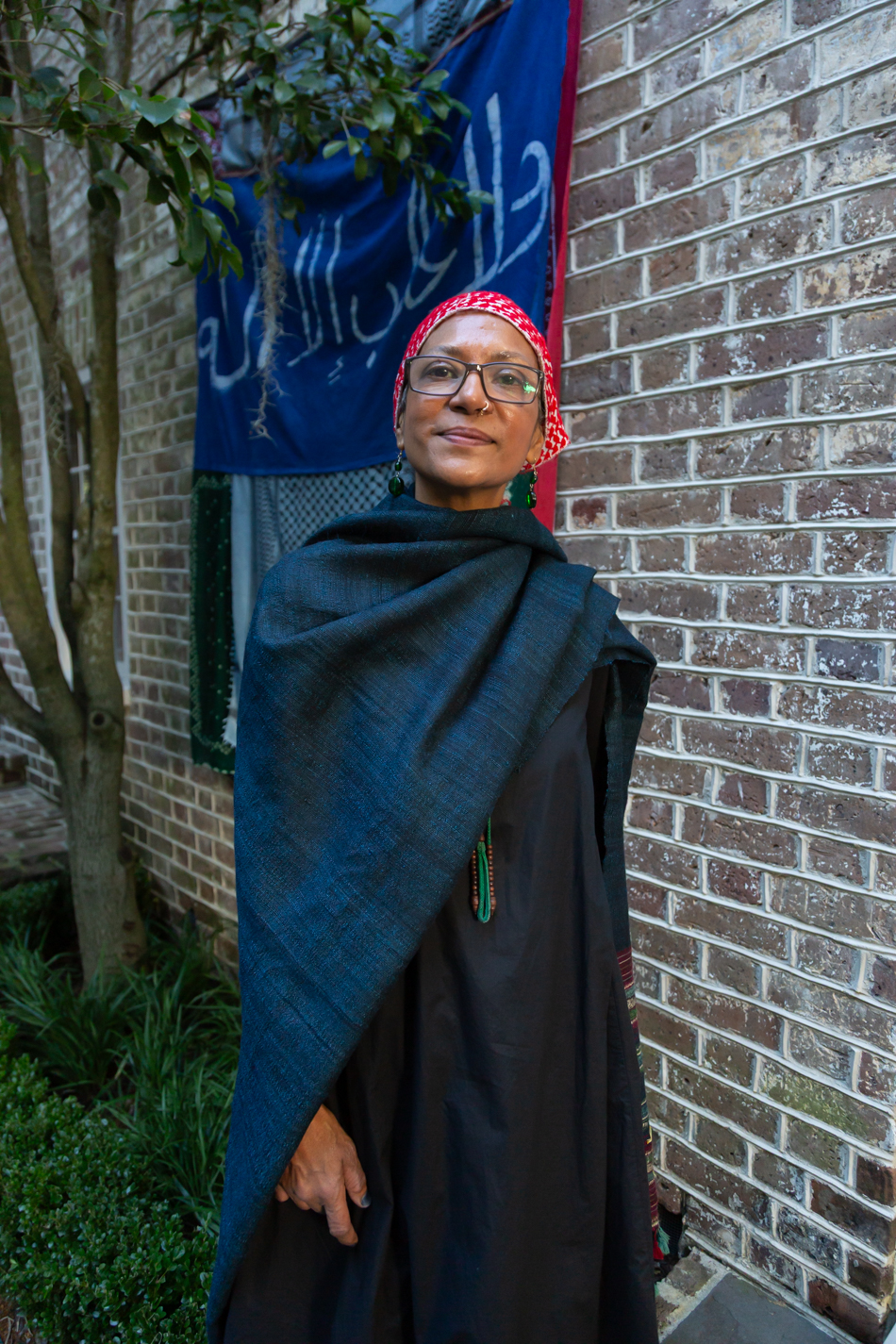
FSA Inspired Garden Party + Open Studios, 2025.
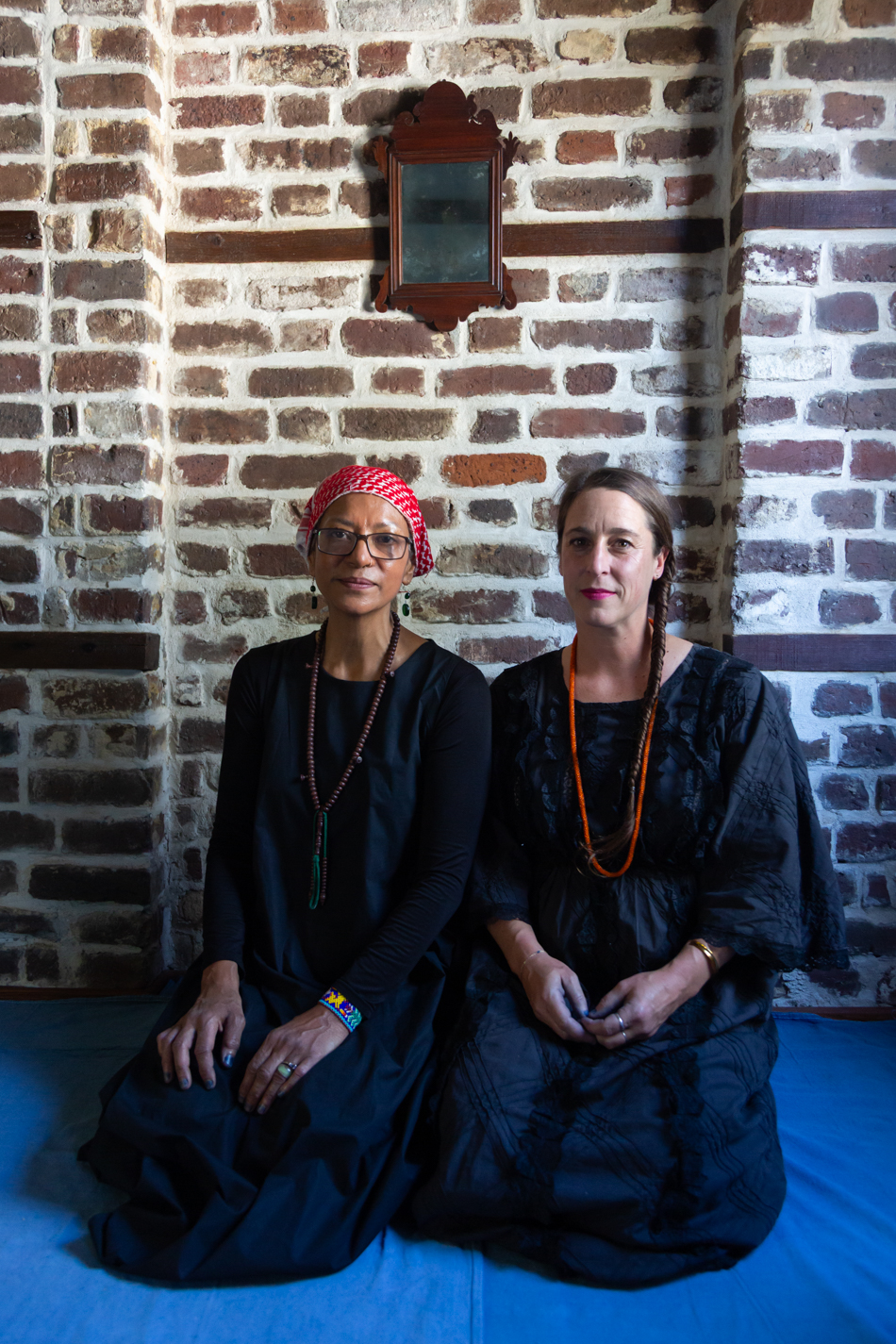
Amina Ahmed (left) with local collaborator Precious Jennings (right), FSA Inspired Garden Party + Open Studios, 2025.
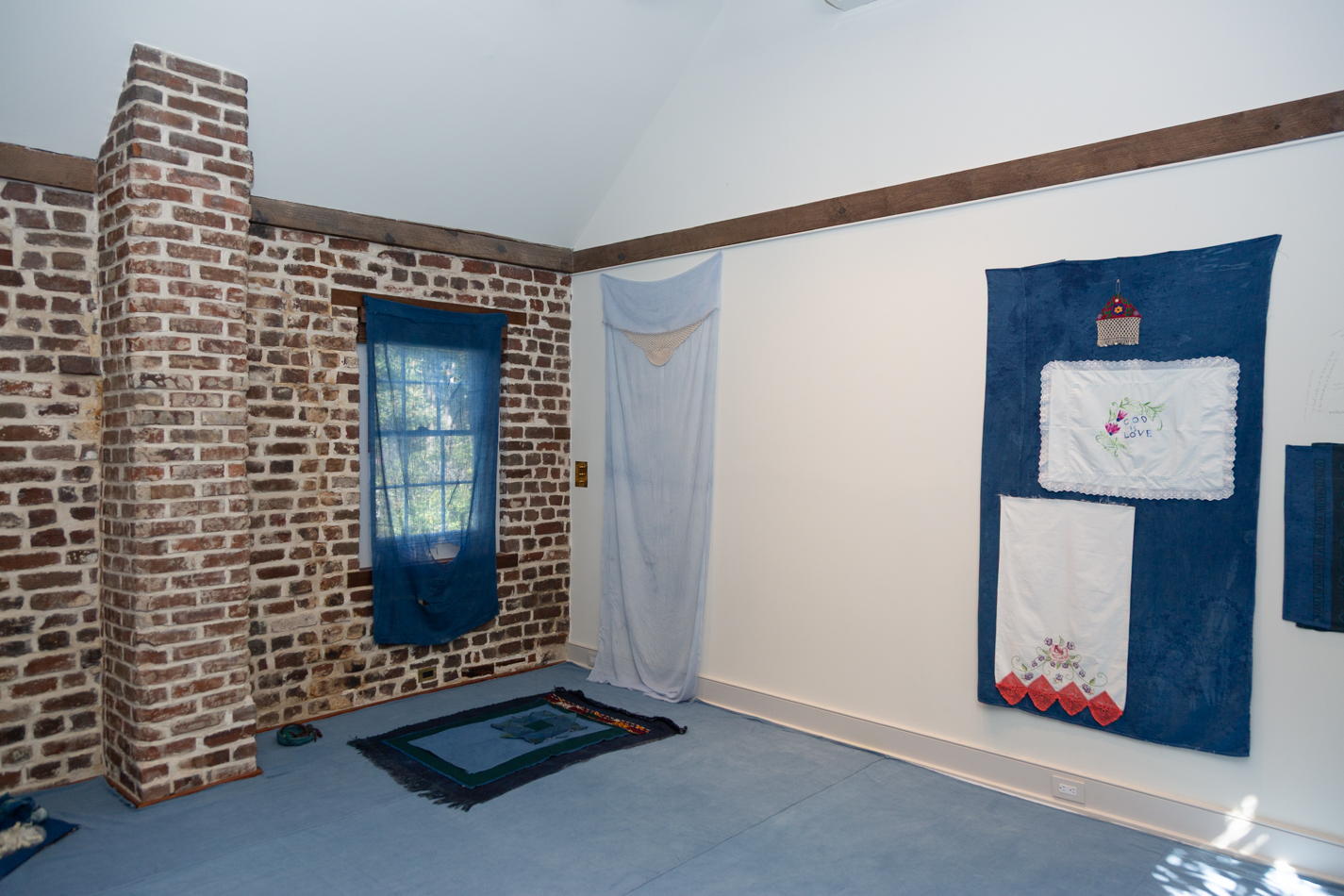
FSA Inspired Garden Party + Open Studios, 2025.
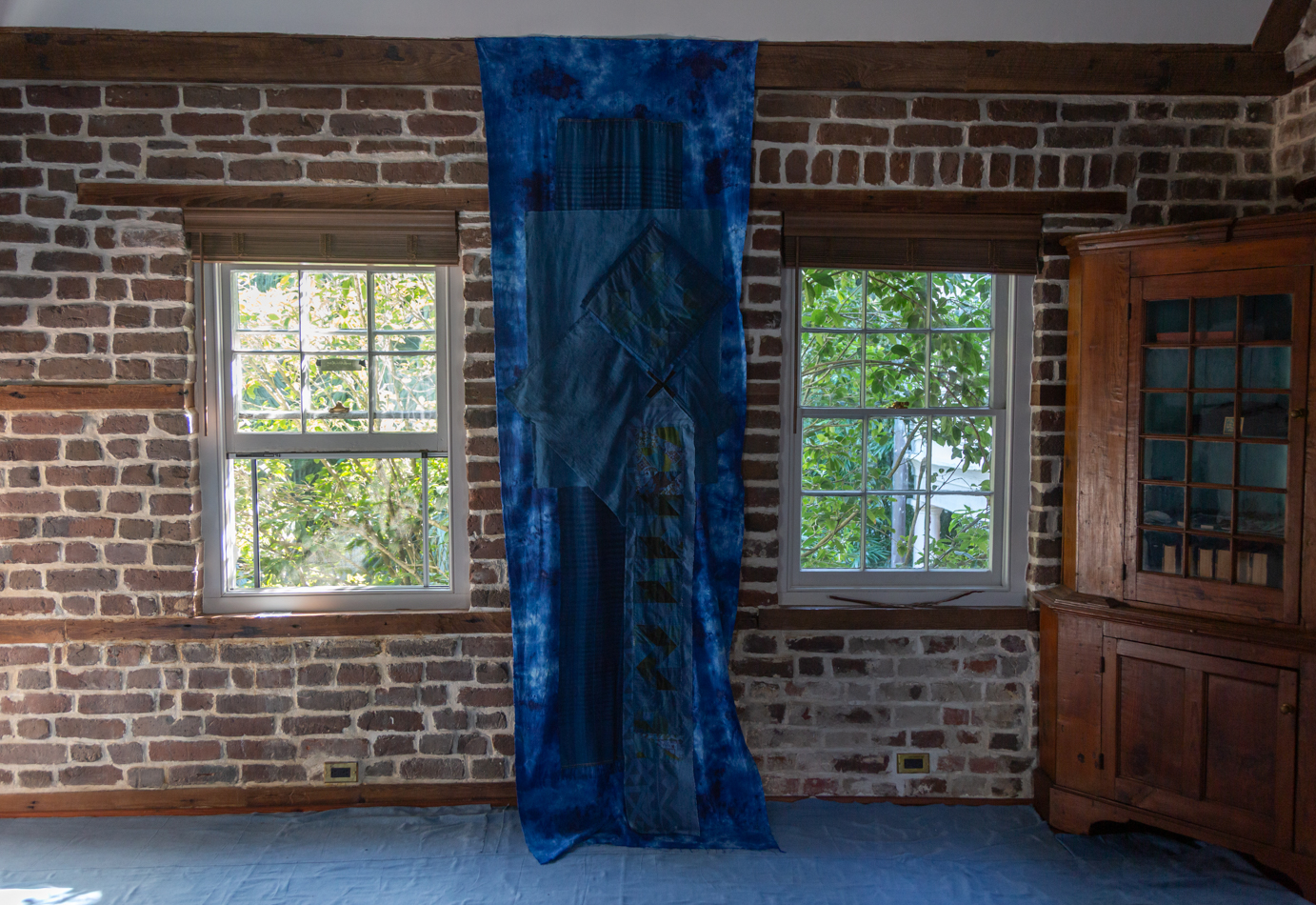
Amina Ahmed & Precious Jennings, "Untitled," 2025.
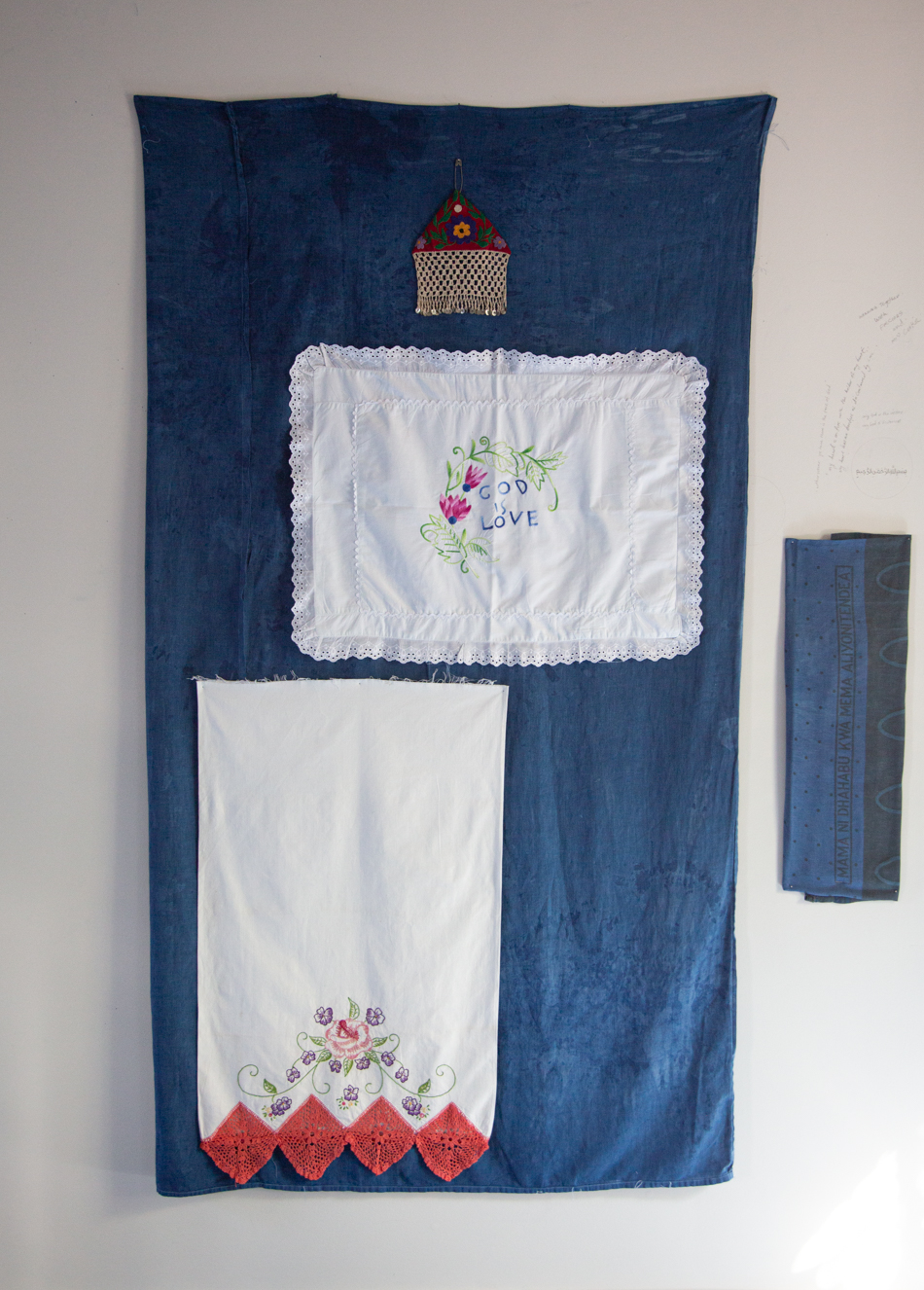
Amina Ahmed & Precious Jennings, "Untitled," 2025.

Amina Ahmed, "The Womb, the Reflection, the Shadow and the Cloak," 2025.
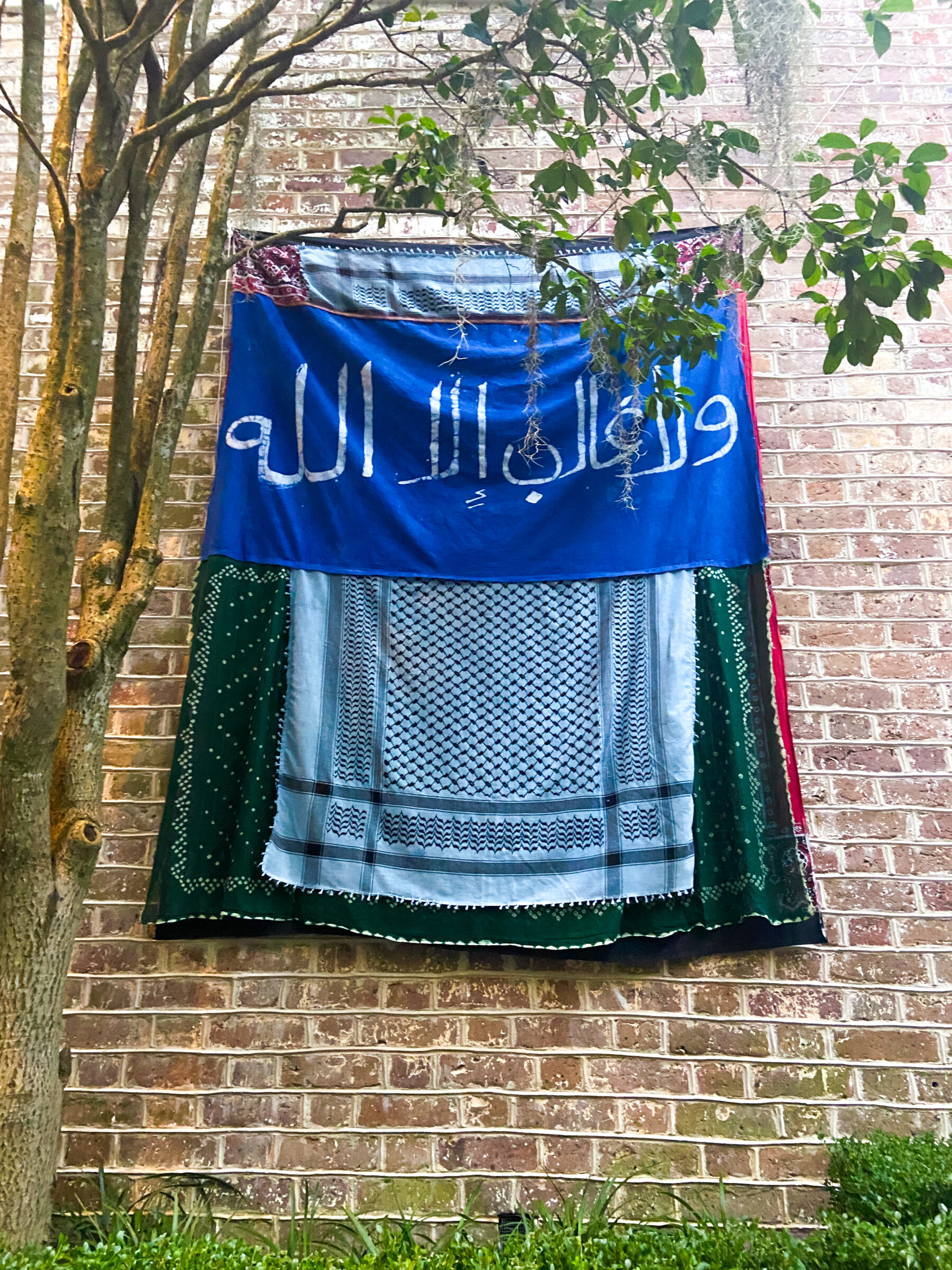
Amina Ahmed & Precious Jennings, "Untitled," 2025.
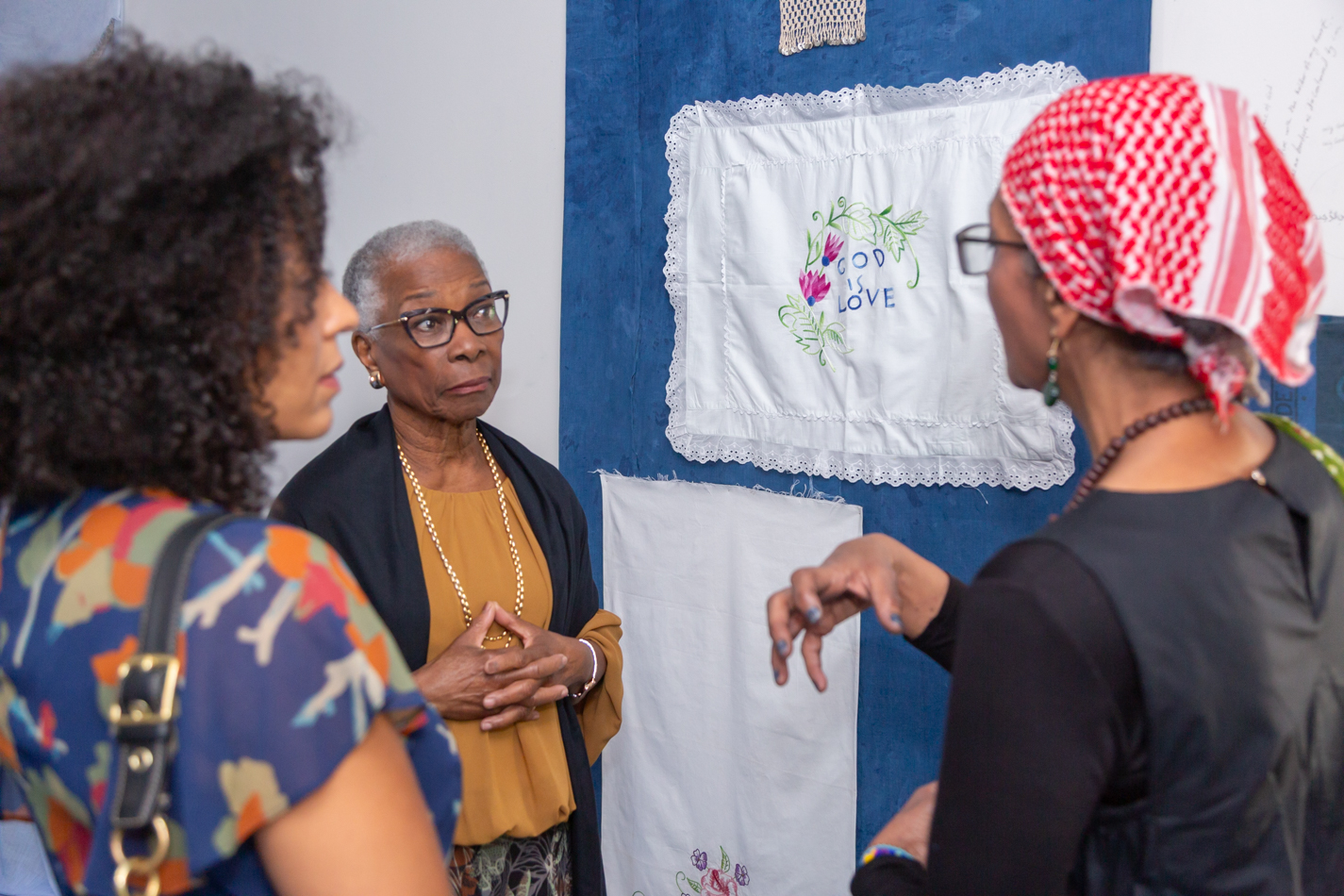
FSA Inspired Garden Party + Open Studios, 2025.
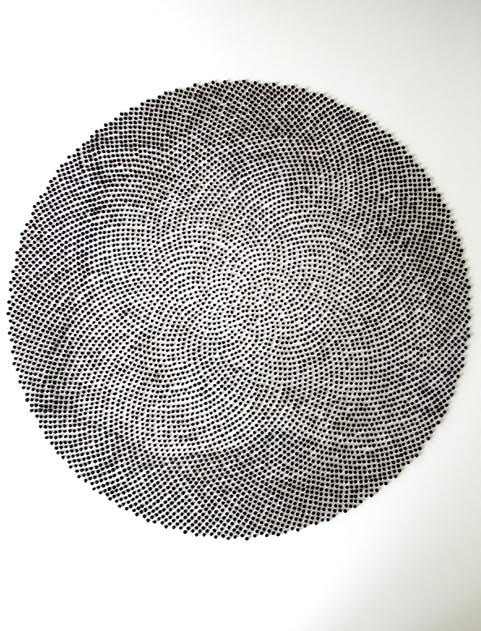
Amina Ahmed, "Invocation," 2011-12.
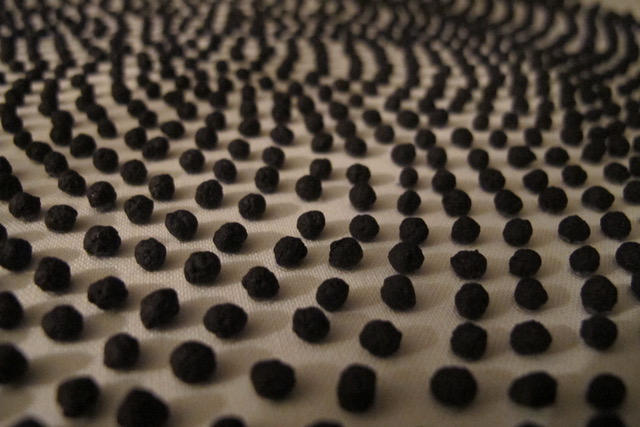
Amina Ahmed, "Invocation" (detail), 2011-12.
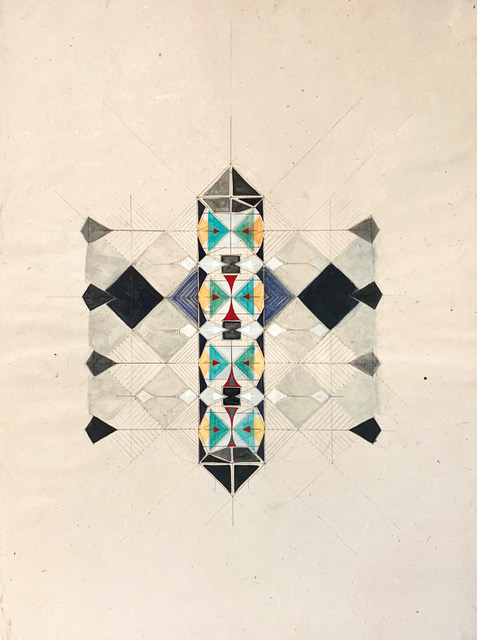
Amina Ahmed, "Rohingya," 2019.
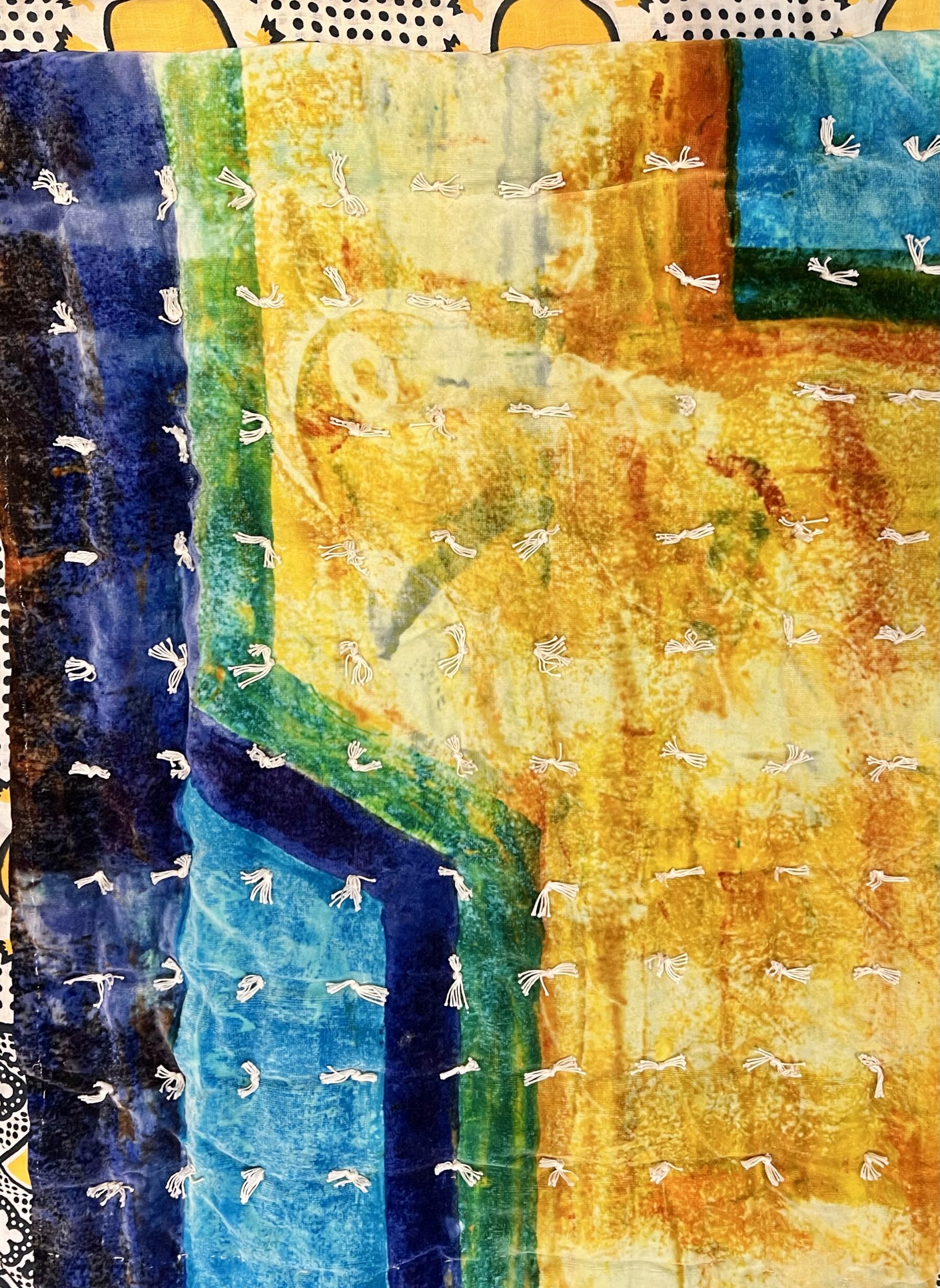
Amina Ahmed, "Wewe Na Mimi" (velvet front), 1989–2023.
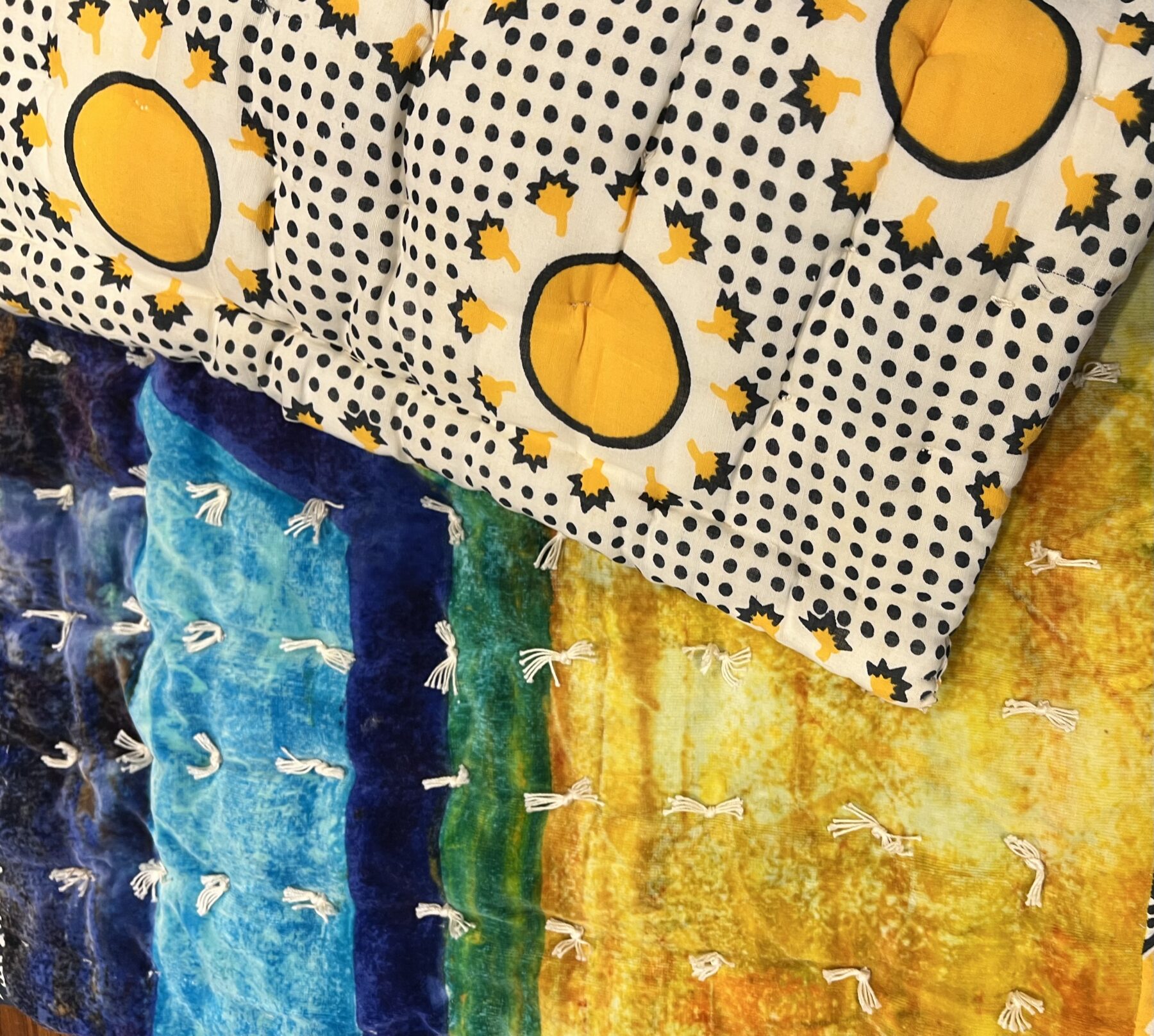
Amina Ahmed, "Wewe Na Mimi," 1989–2023.
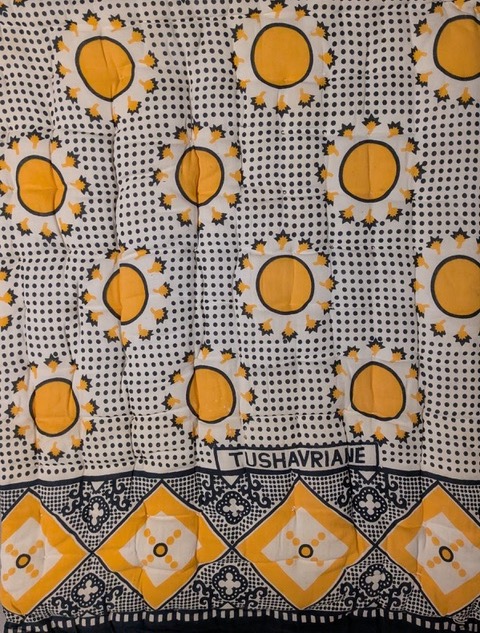
Amina Ahmed, "Wewe Na Mimi" (kitenge back), 1989–2023.
Read